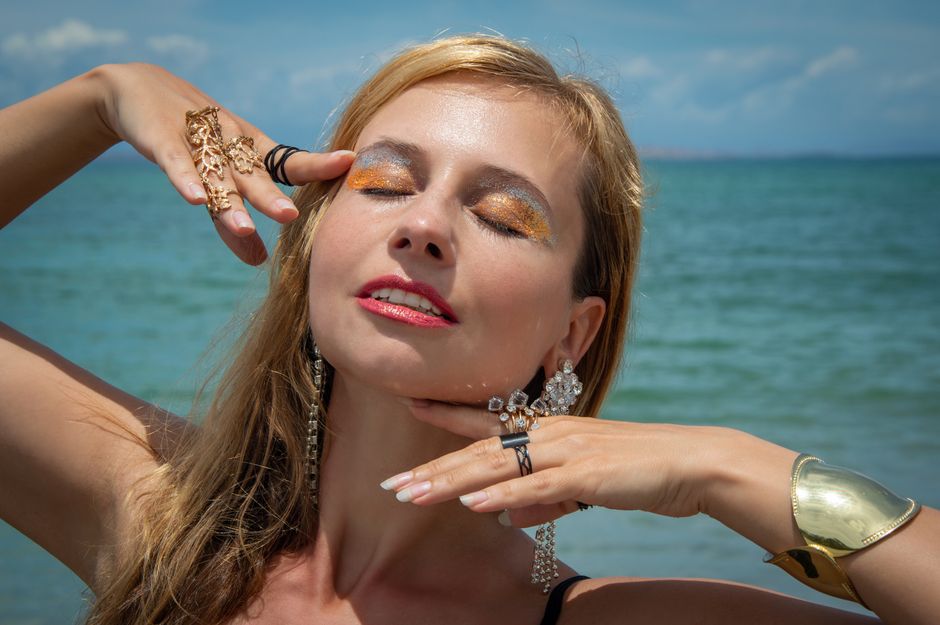
The best statement jewelry creates balance, not camouflage. Start with the dominant line of your face, then choose jewelry that adds contrast. Long earrings suit broad or rounded faces. Curved pieces soften strong angles. Shorter, wider styles can add fullness to a long face. Face shape is a useful filter, but scale and placement decide if a bold piece actually looks polished.
Balance your face shape instead of trying to correct it
Start with the widest visual line
Look straight into a mirror with your hair pulled back. Compare the width of your forehead, cheekbones, and jaw. The widest area usually tells you more than the outline of your chin. A round face has similar width and length, with softer edges. A square face has a broad forehead and a strong jaw. A long face has more vertical length than width. Heart and diamond shapes have narrower lower sections, but they differ at the forehead and cheekbones.
Choose contrast in the opposite direction
Jewelry should introduce a line your face does not already have. Round faces benefit from drops, slim rectangles, and angular details because they add length. Square faces look calmer with circles, ovals, and flexible chains because curves break up hard corners. Long faces usually need width rather than more vertical movement. That does not mean every person with the same face shape needs the same earring. Hair, glasses, neck length, and personal style can change the final result.
My starting rule is simple: match the jewelry scale to your features, then use shape to create contrast.
Which statement jewelry shapes suit each face shape?

This quick chart gives you a reliable first choice before you shop. The measurements refer to the visible size of the jewelry, not the full chain or post.
| Face shape | Best starting line | Useful size | First style to limit |
|---|---|---|---|
| Round | Long, slim, angular | 45–65 mm drops | Very wide button shapes |
| Oval | Most shapes work | 25–55 mm | Only oversized pieces |
| Square | Curved, soft, moving | 30–60 mm | Sharp square studs |
| Long | Wide, rounded, clustered | 25–45 mm wide | Very long narrow drops |
| Heart | Lower-weighted, curved | 35–55 mm | Heavy top-width pieces |
| Diamond | Rounded and balanced | 30–50 mm | Extreme cheekbone width |
Why these lines work
The eye reads vertical jewelry as added length and horizontal jewelry as added width. Curves make a strong jaw appear less visually rigid, while pointed or geometric details add structure to soft contours. The goal is not to make your face resemble an oval. The goal is to stop the jewelry and your features from competing for the same visual space.
Use the chart as a starting point
Measure one favorite pair of earrings with a ruler. If they are 20 mm long and disappear against your face, move toward 35–45 mm. If a 70 mm pair overwhelms your eyes or glasses, reduce the length before changing the shape.
Round faces look best with length and clean edges
For a round face, choose statement earrings that pull the eye downward. The strongest choice is a slim drop between 45 and 65 mm, especially when the design has a pointed, rectangular, or softly tapered end. This creates a longer visual path without making the jewelry look severe.
Pick drops that stay narrow
The Kendra Scott Danielle Earrings are a useful reference for a classic drop silhouette: the roughly 2-inch length gives a round face more vertical definition. Choose a similar proportion with a narrow stone or open metal frame. Keep the width below about 25 mm if your cheeks are full. Open designs also feel lighter than solid discs at the same size.
Know when hoops become too wide
Mejuri Bold Hoops can work on a round face when the diameter stays around 25–30 mm and the metal has a clean, smooth finish. Very large circular hoops repeat the roundness of the face and add width at the cheek line. BaubleBar Mischa Earrings offer a better direction when you want drama: use a clustered, irregular design around 35–45 mm rather than a perfect circle.
Verdict: For a round face, narrow drop earrings are the safest statement purchase because they add visible length without adding bulk beside the cheeks.
Square faces need curves, movement, and softer edges
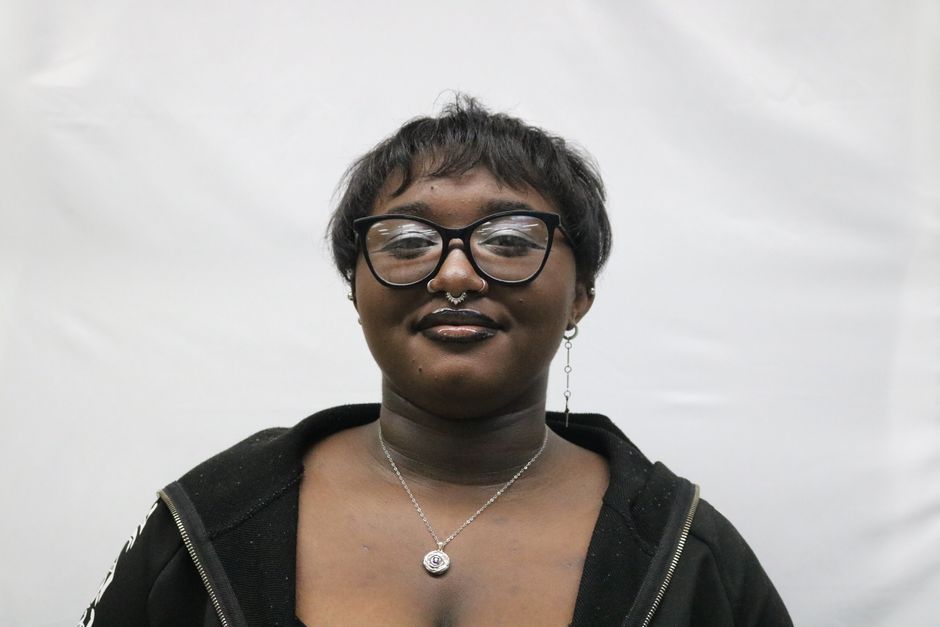
Square faces already have strong structure, so repeating that structure can make the whole look feel rigid. The better choice is jewelry that moves or bends. Hoops, ovals, rounded rectangles, soft teardrops, and flexible chain fringe all create a gentle break against a defined jaw.
Soften the jaw with curved shapes
A rounded earring between 30 and 60 mm usually gives enough presence without creating a hard block beside the face. Choose medium-width metal instead of a paper-thin hoop if you want the jewelry to read as a focal point. The curve matters more than the material. Gold, silver, resin, and colored stone can all work when the outline stays smooth.
Use movement for evening outfits
For a stronger evening look, pick fringe or articulated drops that move as you turn your head. Movement keeps the eye from settling on the exact angles of the jaw. Avoid rigid square studs, sharp triangles, and wide geometric pieces that end at the widest part of your face. A curved necklace can reinforce the same effect. Choose a rounded pendant or a chain with irregular links rather than a stiff collar with a straight lower edge.
Verdict: Curved earrings with visible movement are the best statement choice for a square face because they soften the outline while keeping the look intentional.
Heart, long, and diamond faces need different kinds of balance
These three shapes are often grouped together because the lower face is narrower, but their best jewelry choices are not identical. Use the following order when deciding:
Make the lower half feel fuller
- Heart face: Choose teardrops, rounded chandeliers, and earrings that are slightly wider at the bottom. A visible lower width of 35–55 mm helps balance a broader forehead and pointed chin.
- Long face: Choose hoops, short drops, and clustered earrings that measure about 25–45 mm across. Width matters more than length. Skip narrow earrings that extend far below the jaw.
- Diamond face: Choose oval hoops, curved drops, and pieces with moderate width. Keep the strongest detail below the cheekbone so it does not exaggerate the widest part of the face.
Do not confuse balance with strict rules
A heart-shaped face can still wear a long earring if the lower end is rounded and substantial. A long face can wear a drop if it also has a wide stone or layered shape. The failure mode is not breaking a rule. It is choosing a piece whose strongest visual weight sits exactly where your face is already widest. Move that weight up or down by 10–15 mm and the result can change quickly.
Verdict: Add width near the lower face for heart and long shapes, but keep diamond-face jewelry centered and moderate.
2026 jewelry trends worth buying, plus the ones to skip

The strongest 2026 statement jewelry trend is controlled scale: one noticeable shape, one clear material, and enough empty space for the face to remain visible. This makes bold jewelry easier to wear than heavily layered styling.
The trend winners
| Trend | Best face-shape match | Shopping target |
|---|---|---|
| Open sculptural hoops | Square, long, diamond | 30–45 mm diameter |
| Long linear drops | Round, heart | 45–65 mm length |
| Soft chain fringe | Square, oval | Three to five moving strands |
| Curved tennis necklaces | Heart, diamond | 38–42 cm base length |
| Irregular bold links | Oval, long | 16–18 inch necklace |
The Swarovski Matrix Tennis Necklace shows the clean, light-catching line behind the curved tennis trend. The Missoma Molten Open Link Chain Necklace represents the softer irregular-link direction. Treat both as design references, not automatic recommendations. Their scale must match your neck and neckline.
Skip oversized detail without empty space
Dense crystal clusters and giant solid discs look dramatic online but can dominate the eyes, glasses, and cheekbones in person. BaubleBar Mischa Earrings work best when the rest of the outfit is quiet and the earring stays below roughly 45 mm wide. Skip a trend when it hides your facial expression, catches on your hair, or needs constant adjustment. A statement piece that feels uncomfortable will not become a wardrobe favorite.
How to test statement jewelry before you keep it
Try the jewelry with the hairstyle, glasses, and neckline you actually wear. A piece that looks perfect with a slicked-back bun may disappear under a thick bob or collide with a high collar.
How do I test the proportion?
Take a front-facing photo from eye level, then a second photo from about 45 degrees. Check the space between the jewelry and your jaw, glasses, and hair. Aim for at least 5 mm of visible separation from glasses and at least 10 mm from a high neckline. If the piece touches everything around it, reduce the size or change the placement.
How much is too much?
Large jewelry becomes too large when its outline is the first thing you see in every photo. Test a bold earring with your normal makeup and hair, not with a styled editorial look. If the face disappears, choose an open frame, a thinner edge, or a shorter length. For necklaces, place the pendant where the outfit has visual space instead of directly on a busy print.
What if I love the wrong shape?
Keep the shape and change one measurement. A round face can wear a circle in a smaller diameter, a heart face can wear a narrow drop with a heavier bottom, and a long face can wear a long earring if the design adds width. The best statement jewelry for your face shape is the piece that creates contrast, leaves breathing room, and still feels like your style.