You have five minutes before a presentation, and the outfit on the bed looks polished but strangely weak. The problem is rarely one bad garment. It is usually a mismatch between proportion, contrast, and the level of formality the room expects.
Why Power Outfits Work Before You Say a Word
Clothing creates a fast visual signal
A power outfit solves a simple problem: people form an impression before you have time to explain your experience. Clean lines, controlled contrast, and good fit suggest preparation. That does not mean wearing a stiff suit or copying an executive uniform. It means making every visible choice support the message you want to send.
The strongest professional outfits usually have one clear anchor. It might be a sharply cut jacket, a rich navy trouser, a pointed shoe, or a high-contrast shirt. The rest of the outfit stays quiet so the anchor can do its job. Five competing statement pieces create visual noise. One strong piece creates direction.
Contrast matters more than luxury
A black blazer over a white shirt has strong contrast and reads formal. A camel jacket over a cream knit has low contrast and feels softer. Neither is automatically better. The right choice depends on the room, your role, and how much authority you need to project.
Fabric also changes the signal. Smooth wool, compact cotton, and polished leather look deliberate. Thin jersey, shiny polyester, and wrinkled linen can look casual even when the color is serious. The first verdict is clear: fit and contrast create more authority than a high price tag. A $90 jacket with a clean shoulder can look more convincing than a $700 jacket with collapsing sleeves.
Use Proportion to Make Workwear Look Intentional
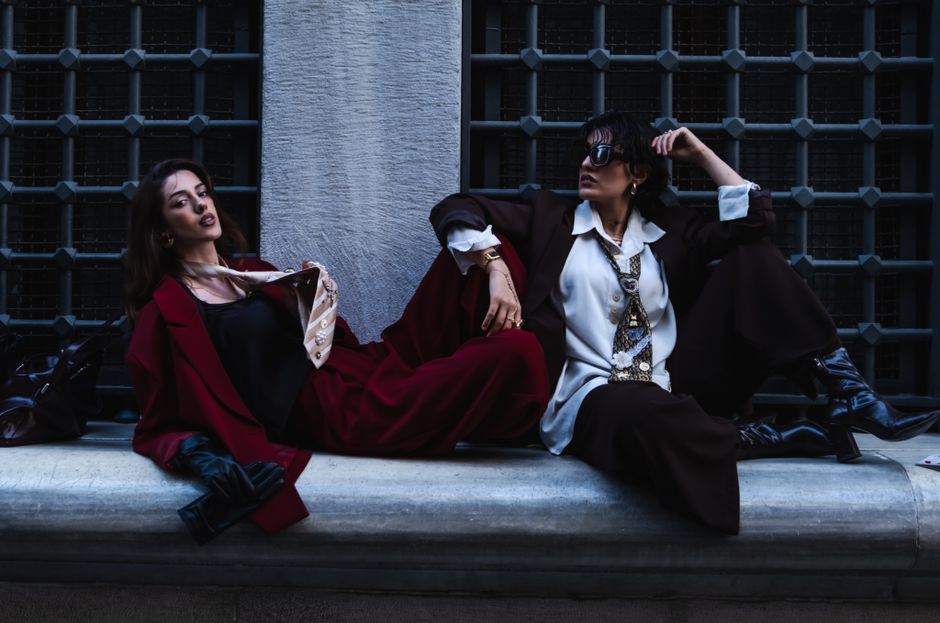
The best power outfit rule is simple: pair one structured shape with one relaxed shape. A fitted jacket can balance wide-leg trousers. A slim knit can balance a fuller midi skirt. Matching volume on top and bottom often looks accidental unless the fabric has enough structure to hold the silhouette.
Start with the shoulder line. The jacket should sit flat at the shoulder seam, with no diagonal pulling across the chest. Then check the sleeve. It should finish near the wrist bone, allowing roughly 1 cm of shirt cuff to show when the shirt is part of the look. Trouser hems need equal care. A straight trouser can skim the top of the shoe; a wide leg usually looks better with a longer break that nearly reaches the floor.
The two-to-one outfit formula
Use two quiet pieces and one noticeable piece. For example, combine a navy blazer, ivory shirt, and burgundy loafer. The shoe supplies interest without making the outfit feel theatrical. Another option is a gray trouser, black knit, and sculptural gold earring.
Choose one visual line
Vertical lines make an outfit feel longer and calmer. An open jacket, a long pendant, pressed trouser creases, or a column of similar colors can create that effect. Do not use every trick at once. The winning approach is restraint: one dominant line, one point of contrast, and enough empty space around both.
Three Combinations for Meetings, Presentations, and Interviews
Power dressing should change with the task. A client presentation needs more structure than a normal office day. An interview needs polish without looking like a costume. A team meeting allows one softer element.
- The presentation uniform: Wear a single-breasted blazer with a defined shoulder, a tucked-in shirt, straight trousers, and low-heeled pointed shoes. Keep the color palette to navy, white, and one accent such as oxblood. This combination works because the jacket frames the upper body while the trouser crease keeps the lower half sharp.
- The interview combination: Choose a matching jacket and trouser only when both pieces fit perfectly. Add a fine-gauge knit or simple poplin shirt rather than a dramatic blouse. Avoid loud prints, oversized hardware, and new shoes that have not been worn indoors. The goal is reliable polish, not a fashion experiment.
- The creative-office version: Use a tailored vest over a crisp shirt, a full-length trouser, and a sleek flat. Add texture through suede, ribbed knit, or brushed wool instead of adding several colors. This keeps the outfit modern while preserving a professional outline.
For all three, steam the jacket, remove visible lint, and check the back view before leaving. A power outfit must work from every angle, especially in a conference room where people see you walking away.
Which Workwear Pieces Deserve the Investment?
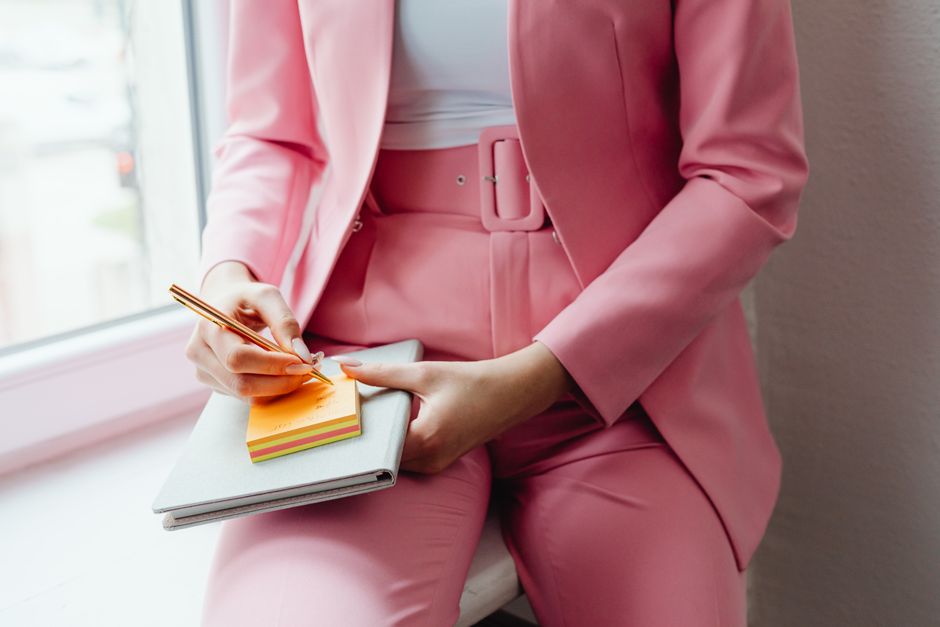
Buy the pieces that control your silhouette first. A great blazer changes jeans, trousers, dresses, and skirts. A novelty blouse usually changes one outfit. The products below are useful reference points because they show how different price levels handle structure, fabric, and repeat wear.
| Piece | Example | Typical price | Best use |
|---|---|---|---|
| Structured blazer | Everlane Italian Wool Oversized Blazer | About $268 | Modern business casual offices |
| Soft tailored jacket | M.M.LaFleur The Jardigan | About $295 | Travel days and long meetings |
| Tailored trouser | Theory Good Wool Treeca Pant | About $295 | Sharp matching sets |
| Budget trouser | Uniqlo Smart Ankle Pants | About $50 | Starter workwear wardrobes |
| Polished loafer | Sam Edelman Loraine Loafer | About $150 | Walking-heavy office days |
The strongest investment is the blazer
For most wardrobes, the Everlane Italian Wool Oversized Blazer is the most useful direction. Its relaxed cut works over a fitted knit and gives slim trousers a current shape. It is not the best pick for a very traditional law or finance office, where a closer fit and a matching trouser may look more credible.
When the cheaper trouser wins
The Uniqlo Smart Ankle Pants make sense when you are still testing your office uniform or need several colors. Their lower price lets you buy navy, charcoal, and black without tying up your budget. The tradeoff is a shorter ankle length and less formal presence than the Theory Treeca. My verdict: choose Uniqlo for rotation, Theory for an important matching suit.
How Should a Power Outfit Change by Workplace?
What works in a conservative office?
Use a matching suit in navy, charcoal, or deep brown with a pale shirt and closed-toe shoe. Keep the jacket hem around the high hip or lower, and avoid a cropped silhouette that exposes too much shirt when you sit. A low block heel or polished loafer gives authority without turning the outfit into eveningwear.
What works in a business-casual office?
Separate the levels of formality. Pair a navy blazer with gray trousers, or wear a fine knit with a pleated skirt and structured shoe. This approach feels less rigid while keeping the shoulder and waistline defined. The Sam Edelman Loraine Loafer is a practical reference because its penny-loafer shape looks finished with trousers but still handles a long commute.
What works in a creative workplace?
Replace one traditional piece with an architectural alternative. A long vest can stand in for a jacket. A matte satin skirt can replace a trouser. A sculptural flat can replace a pump. Keep the color story tight so the unusual shape looks deliberate rather than random. For most readers, the clear winner is a structured layer with relaxed trousers; it feels current without asking the outfit to perform too hard.
The Mistakes That Make Professional Outfits Look Weak
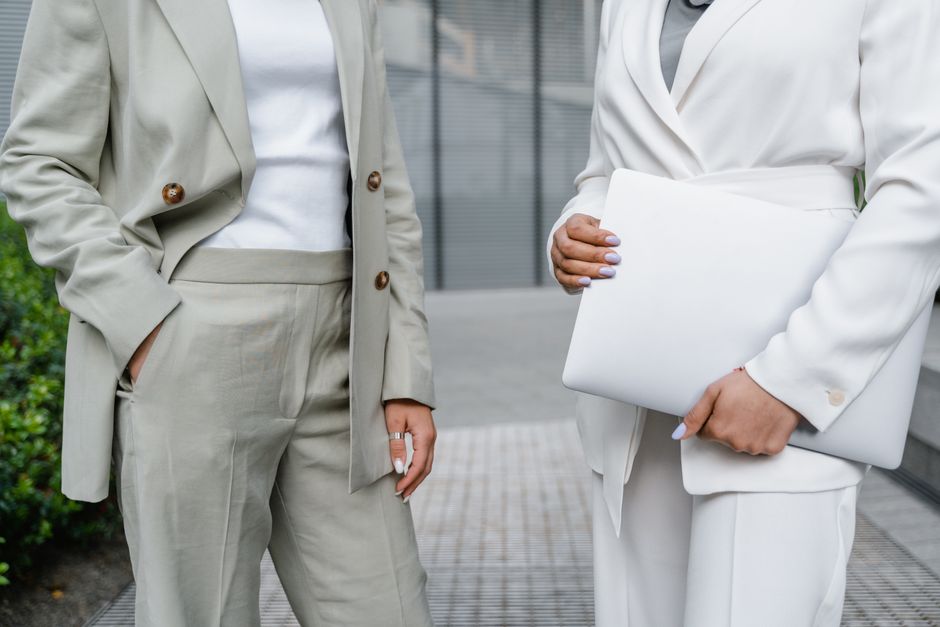
Do not use a larger size to create polish. Extra fabric at the shoulder, sleeve, or waist can make an expensive garment look borrowed. If you want a relaxed silhouette, buy a deliberately oversized cut with a strong shoulder and clean lapel. Do not size up a narrow blazer.
Three other mistakes cause most problems:
- Wearing a jacket that ends at the widest point of the hip without balancing it with a longer trouser line.
- Mixing warm and cool neutrals without a bridge color. Camel, gray, and bright white can look disconnected unless one accessory ties them together.
- Choosing shoes that are too delicate for the trouser. A wide-leg pant usually needs a substantial loafer, boot, or pointed shoe to keep the hem from swallowing the foot.
Skip the matching suit when the jacket pulls across the chest, the trousers gap at the waist, or the fabric shines at the seat. A broken-up outfit with two well-fitting separates will look stronger than a complete suit that fights your body. Also skip white sneakers for a formal interview, even if the office dress code is relaxed. They can work later, after you understand the room.
The verdict is practical: remove the weakest-fitting piece before adding another accessory. A belt cannot repair a bad trouser break, and a statement necklace cannot fix a collapsing shoulder.
Build the Outfit in Five Minutes
Start with the highest-stakes item
Choose the garment that matches the day’s risk. For a presentation, start with the blazer. For a long commute, start with the shoe. For an interview, start with the trouser and jacket together. This prevents a pretty blouse or interesting earring from dictating an outfit that cannot handle the occasion.
Use the final three checks
- Stand in front of a mirror and check the shoulder, waist, and trouser hem.
- Sit down and raise both arms. If the jacket pulls or the shirt untucks, change the base layer.
- Take one phone photo from the front and one from the side. The camera catches proportions that a mirror can hide.
Finish with one controlled accent: a watch, a small earring, a colored shoe, or a textured belt. Then stop. Power dressing is not about making every item impressive. It is about making the whole outfit easy to read.
That five-minute decision turns the rushed presentation morning into a solved problem. The blazer frames the body, the trousers set the line, and the single accent gives the outfit a point of view. You walk into the room looking prepared because the clothes are doing exactly what they should.