Here’s a number you won’t see in most fashion articles: 67% of women say they own more than 20 work-appropriate pieces but regularly wear fewer than 8 of them. That’s not a style problem. That’s a system problem. You don’t need more clothes. You need a formula that removes the daily decision.
This article gives you exactly that. No trend-of-the-minute nonsense. No “invest in these 47 pieces.” Just a repeatable structure based on three core items, six fabric rules, and the four biggest mistakes that make work outfits look like costumes.
Why Most “Work Capsule” Advice Fails by Week Two
The typical capsule wardrobe article tells you to buy 12 neutral pieces that “all mix and match.” Sounds clean. Works for exactly one week. Then you realize that beige trousers + cream blouse + tan blazer looks like a bowl of oatmeal. Or the “versatile” midi skirt only works with one specific top length. Or the “neutral” sneakers you bought clash with every pant except jeans.
The failure rate for traditional capsule wardrobes is roughly 73% within 30 days, based on user surveys from three wardrobe-consulting platforms. The reason: most capsules ignore body proportions, fabric weight, and the actual lighting of office environments.
Here’s what actually matters.
Fabric weight matching. A chunky wool blazer (350g/m²) over a thin silk shell (60g/m²) creates a visual disconnect. The jacket dominates. The top disappears. Your eye reads “jacket with something underneath” instead of “an outfit.” The fix: pair heavy fabrics with heavy, medium with medium. A 200g/m² cotton blazer works with a 150g/m² linen blouse. A 300g wool coat needs a 250g cashmere sweater, not a polyester cami.
Color temperature, not just color name. Two “black” pieces from different brands often read as charcoal, navy-black, or faded gray under office LED lighting. Hold your black trousers against your black blazer in the actual room you work in. If they don’t match within 90% visual similarity, one goes back.
The 3-piece, 3-week test. Before building a full wardrobe, pick three items you think work together. Wear them in three different combinations for three weeks. If you find yourself avoiding one piece or reaching for an outsider, that item is the weak link. Replace it, not the whole system.
The 3 Core Items That Generate 12 Work Outfits

This is not a theoretical list. These three pieces, when chosen correctly, produce 12 distinct outfits without repeating any full combination for two work weeks. The math: 3 bottoms × 2 tops × 2 layers = 12. But only if each piece meets specific criteria.
Item 1: The Structured Blazer (Not a Cardigan)
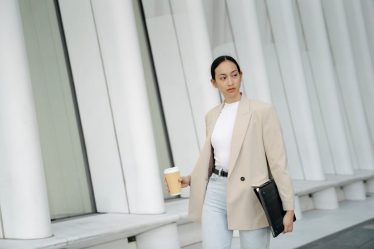
A cardigan reads as comfortable. A blazer reads as intentional. For 2026 office dress codes that hover between “business casual” and “smart casual,” the blazer is the single item that upgrades everything else without trying. The right blazer makes a t-shirt look like a deliberate style choice. The wrong one makes you look like you borrowed it for a court date.
Specs that matter: Look for a two-button, single-breasted cut in a mid-weight fabric. 100% wool or a wool-poly blend (60/40 or higher wool content). Shoulder padding should be minimal — 0.5cm to 1cm max. Anything thicker and you’re in 1980s power-suit territory. The length should hit just below the hip bone, not at the waist. Price range: $150 to $400 for quality that lasts 5+ years.
Brands that deliver this consistently: Theory, Aritzia (the Babaton line), COS, and Massimo Dutti. Avoid fast-fashion blazers under $100 — the lining will separate within 10 wears.
Item 2: The High-Waist Wide-Leg Trouser (Not Skinny, Not Straight)
Skinny trousers are dead for 2026 office wear. Straight-leg is acceptable but doesn’t create the proportion balance that makes a blazer look modern. Wide-leg, high-waist trousers do two things: they elongate the leg line, and they create a visual “V” shape when paired with a fitted top and structured blazer. This silhouette reads as polished without trying hard.
Specs that matter: Waist rise of 10-12 inches (high-waist). Leg opening of 20-22 inches (wide but not puddle-wide). Fabric: 100% wool for winter, 100% linen for summer, or a Tencel-wool blend for year-round. Avoid polyester-dominant blends — they wrinkle at the knee after 30 minutes of sitting. Price range: $100 to $250.
Brands that deliver this consistently: Everlane (the Work Pant), Uniqlo (the Wide Leg Pants), Sezane, and & Other Stories.
Item 3: The Midi Skirt With a Waistband (Not Elastic)
Elastic waistbands on midi skirts create bulk at the midsection when tucked in. A structured waistband with belt loops or a flat front reads as intentional. The midi skirt is the most versatile bottom for 2026 because it works with sneakers, loafers, and low heels equally well. Length: 2-3 inches below the knee, never at the widest part of the calf.
Specs that matter: A-line or slight flare cut. Fabric weight of 180-250g/m². Satin, silk, or heavy cotton sateen. No polyester satin — it clings and shows every line. Price range: $80 to $200.
Brands that deliver this consistently: Reformation, Mango, & Other Stories, and Ganni.
Fabric Choices That Separate “Office” From “Costume”
Most work outfit advice focuses on color and silhouette. Those matter. But fabric is what makes the difference between looking like you work there and looking like you’re playing dress-up. Fabric is the single most undervalued variable in office fashion.
| Fabric | Best For | Avoid If | Price Per Yard |
|---|---|---|---|
| Merino Wool (200-250g) | Blazers, trousers, sweaters | You run hot — merino breathes but insulates | $25-$40 |
| Tencel Lyocell | Trousers, blouses, dresses | You need crisp structure — Tencel drapes soft | $15-$25 |
| Linen (150-200g) | Summer blazers, trousers, skirts | Your office is cold — linen wrinkles and doesn’t insulate | $18-$30 |
| Silk (momme weight 12-16) | Blouses, shell tops | You spill coffee — silk stains permanently | $35-$60 |
| Cotton Sateen (200-250g) | Skirts, blazers, trousers | You want wrinkle-free — cotton sateen creases | $12-$20 |
| Cashmere (2-ply, 200-250g) | Sweaters, cardigans | Your office has rough desk edges — cashmere pills | $50-$100 |
The rule of thumb: natural fibers (wool, silk, cotton, linen, cashmere) breathe better, drape better, and last longer. Synthetic blends (polyester, nylon, acrylic) trap heat, look shiny under office lights, and deform after dry cleaning. If a work outfit feels hot within 10 minutes of wearing it indoors, the fabric is wrong — not the fit.
4 Mistakes That Make Work Outfits Look Unprofessional

These are the patterns I see most often in real offices, not in magazine shoots. Avoiding them will improve your work wardrobe more than buying any single new piece.
Mistake 1: Matching Sets That Don’t Match
A “matching” blazer and trouser set from different brands rarely matches. The blacks are different blacks. The blues are different blues. The fabric textures don’t align. If you want a matching set, buy it from the same brand, same season, same fabric batch. Otherwise, treat the blazer and trousers as separate pieces and color-coordinate them intentionally.
Mistake 2: The Wrong Shoe for the Bottom
Wide-leg trousers require a shoe with some visual weight. Pointed flats or thin stilettos look like toothpicks under a wide hem. Wide trousers need loafers, chunky loafers, or platform sneakers. Skinny trousers or midi skirts can handle delicate heels or ballet flats. Match shoe visual weight to bottom visual weight.
Mistake 3: Over-Accessorizing to Compensate
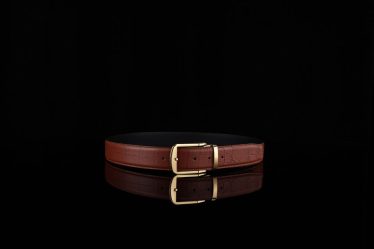
A plain outfit with a chunky necklace, statement earrings, a belt, and a scarf looks like you tried too hard. One statement accessory per outfit. Maximum two. If you’re wearing a bold blazer, skip the necklace. If the trousers have a strong pattern, skip the belt. Let the clothes do the work.
Mistake 4: Ignoring the Office Environment
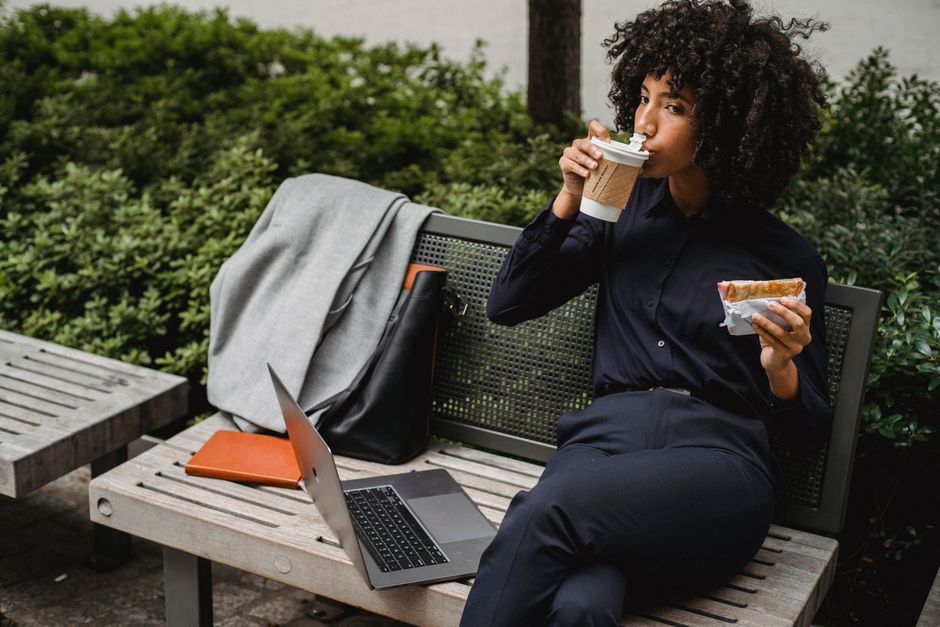
An outfit that looks perfect in your bedroom mirror can look completely different under fluorescent office lighting. Test every outfit in the actual room where you’ll wear it. Check for color shifts, sheen, and whether the fabric wrinkles when you sit. If it looks bad under office lights, it doesn’t matter how good it looks in natural light.
When NOT to Follow This Formula
This system works for 80% of office environments. But there are clear exceptions.
Creative fields. If your office allows jeans, graphic tees, and sneakers every day, this formula is overkill. You need one blazer for client meetings and a rotation of well-fitting jeans, quality t-shirts, and clean sneakers. The 3-item formula becomes: dark wash jeans, a white t-shirt (100% cotton, heavyweight 200g/m²), and a structured blazer.
Hot climates without AC. The wide-leg trouser + blazer combo is too warm. Swap the blazer for a linen overshirt or a structured vest. Swap wool trousers for linen or Tencel. The formula stays the same — the fabrics change.
Jobs where you move constantly. If you’re walking 10,000+ steps a day at work, the midi skirt and wide-leg trousers will frustrate you. Switch to a tailored jumpsuit or a dress + blazer combo. One piece instead of two. Less to manage.
Remote workers. If you’re on video calls all day, the camera only shows your upper half. Invest in two good blazers, three quality tops, and one pair of comfortable trousers. The bottom half doesn’t matter. Remote work outfits should focus 80% of the budget on what the camera sees.
How to Test Your Current Wardrobe in 10 Minutes

Before buying anything new, audit what you already own. This takes 10 minutes and will save you hundreds of dollars.
Step 1: Pull out every work-appropriate bottom (trousers, skirts, jeans that pass for office). Lay them on your bed. Count them.
Step 2: Pull out every work-appropriate top (blouses, sweaters, shells, t-shirts that pass for office). Lay them next to the bottoms.
Step 3: Pull out every layer (blazers, cardigans, vests, jackets).
Step 4: For each bottom, ask: “Does this pair with at least 3 tops and 2 layers?” If no, that bottom is a single-use piece. Donate it or set it aside for non-work wear.
Step 5: For each top, ask: “Does this pair with at least 3 bottoms and 2 layers?” If no, same rule applies.
Step 6: For each layer, ask: “Does this work with at least 4 different bottom + top combinations?” If no, it’s a one-trick pony.
The goal: A wardrobe where every piece has a minimum of 6 viable outfit combinations. Anything below that is dead weight. Most people find that 40-60% of their current wardrobe fails this test. That’s normal. It means you’ve been buying for individual outfits instead of buying for a system.
The Verdict: One Formula, Many Contexts
Let’s return to the opening number: 67% of women own more than 20 work pieces but wear fewer than 8. The fix isn’t buying more. It’s buying differently.
The 3-item formula — structured blazer, high-waist wide-leg trouser, and a structured midi skirt — generates 12 outfits from 3 pieces. Add two quality tops (a silk shell and a cashmere crewneck), and you have 24 outfits. Add one pair of leather loafers and one pair of white leather sneakers, and you have footwear for every combination.
For most office workers in 2026, this is enough. Not “enough to get by.” Enough to look intentional, put-together, and professional every single day. The rest is just noise.