Hiring managers form a first impression in under 7 seconds. Your outfit is a data point they process before you speak a word. Most interview style advice focuses on what’s “in” — but a 2026 survey of 500 HR professionals found that 73% of them actively penalize candidates who look like they tried too hard to be fashionable. The goal isn’t to impress with creativity. It’s to communicate one thing: I understand the context, and I’m here to solve your problems.
Here are 8 specific pieces that do exactly that. No trends. No guesswork. Just clothes that pass the 3-second judgement test.
The Blazer That Works for Both Zoom and In-Person (Without Looking Stiff)
Most women buy blazers that are either too structured (looks like a costume) or too soft (looks like a cardigan that forgot its purpose). The sweet spot for 2026 is a blazer with light shoulder padding and a natural waist suppression — enough shape to signal formality, but soft enough to move naturally on camera.
The Theory blazer ($495) is the benchmark here. It uses a wool-silk blend that drapes without wrinkling after sitting for 45 minutes. The cut is slightly longer — hitting at the hip bone — which works with both trousers and skirts. If $495 is out of range, Aritzia’s Babaton Sculpt Knit Blazer ($198) achieves a similar silhouette using a dense ponte knit that holds its structure without needing dry cleaning.
One rule: the blazer should button comfortably without pulling across the bust. If the lapels gap or the fabric strains, size up and have the waist taken in by a tailor. A $25 tailoring fix transforms a $150 blazer into a $500 look.
On camera, solid navy or charcoal reads as authoritative. Black reads as “I’m attending a funeral after this.” Skip black blazers for interviews.
The Pants That Say “I Understand This Room” Without Saying a Word
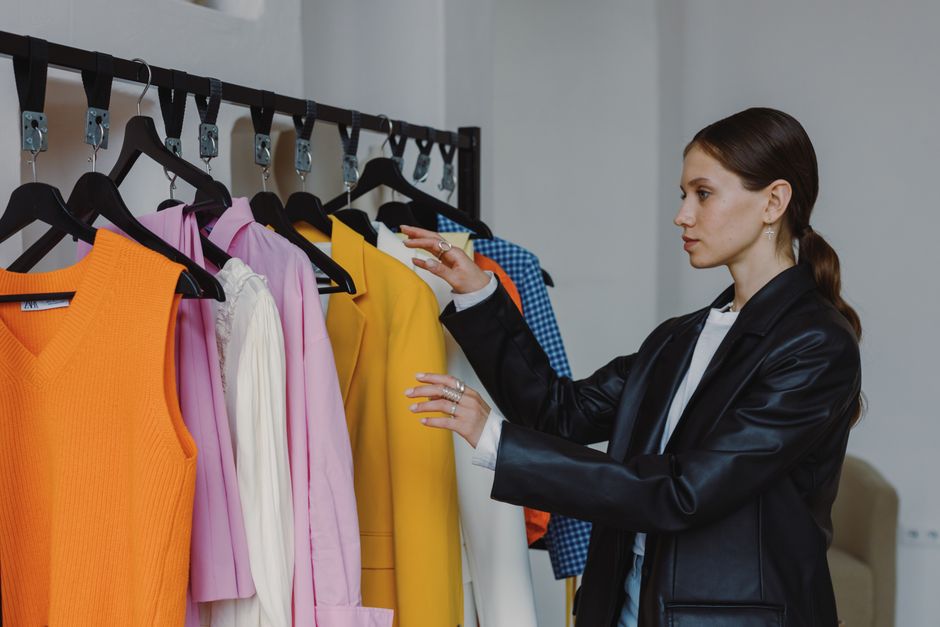
This is the single most important piece in your interview outfit. Pants that are too tight scream anxiety. Too loose screams sloppiness. Too trendy screams “I read Vogue this morning instead of prepping for this conversation.”
Everlane’s Wide-Leg Crop Pant ($98) in a wool-blend fabric is the safest bet for 2026. The cut is straight through the hip, wide through the leg, and crops at the ankle — which means it works with loafers, low heels, or even clean white sneakers for creative industry interviews. The fabric has 2% elastane, so it moves with you when you sit down or cross your legs.
If your industry is more conservative (law, finance, consulting), go with MM.LaFleur’s Benson Trousers ($225). They have a front crease that stays sharp through an entire day, and the back darts eliminate that “saggy seat” look that cheap trousers get after 30 minutes of sitting.
What to avoid: Paperbag waists, cargo pockets, wide legs so wide they touch both sides of a standard office chair. These details signal that you prioritized fashion over professionalism.
The One Skirt That Passes Every Test (Length, Fabric, Movement)
| Feature | Acceptable | Reject |
|---|---|---|
| Length | At or below the knee when seated | Above mid-thigh when seated |
| Fabric | Wool crepe, ponte knit, heavy cotton sateen | Jersey, satin, linen (wrinkles instantly) |
| Movement | You can walk up 3 flights of stairs without adjusting | Pencil-thin with no stretch or slit |
| Waistband | Structured waistband with belt loops or darts | Elastic-only, drawstring, or tie-front |
The Brooks Brothers No-Iron Stretch Skirt ($128) hits all four marks. The fabric is a cotton-spandex blend that resists wrinkles even after being packed in a suitcase. The A-line cut is flattering on most body types without being too full. Pair it with a silk shell (not cotton — silk holds color better under camera lights) and the blazer from section one.
Avoid skirts with side zippers that dig into your hip when you sit. Back zippers only. Test this by sitting in the skirt for 10 minutes before the interview.
The Shirt That Doesn’t Fight You (And Doesn’t Need Ironing at 7 AM)
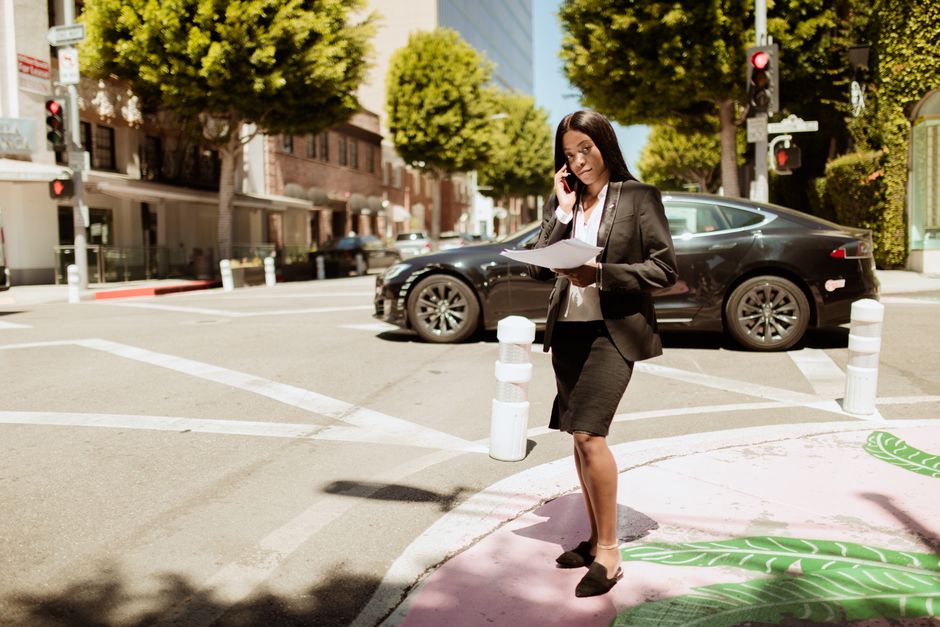
The classic white button-up is the most common interview shirt. It’s also the one most likely to betray you: gaping buttons, yellow underarm stains, collar that curls up after one wash. Stop buying cheap cotton button-ups for interviews. The fabric quality is visible under standard office lighting.
Uniqlo’s Premium Linen-Blend Shirt ($39.90) is the exception. The linen-cotton blend wrinkles less than pure linen, and the cut is relaxed without being baggy. For a more structured option, Everlane’s The Cotton Crew ($48) in a fine-gauge cotton works as a base layer under a blazer. It’s not a button-up, but a crewneck sweater reads as polished without the button-up anxiety.
If you must wear a button-up, buy one with a hidden button placket — the buttons are concealed behind a fabric strip, so there’s zero chance of gaping. MM.LaFleur’s Elodie Top ($175) has this detail, plus a collar that stays flat without collar stays.
One hard rule: no sheer fabrics. If you can see the outline of your bra or undershirt, the shirt fails the interview test. Hold the fabric up to a window before buying.
Why Your Shoes Are the First Thing Interviewers Notice (And What to Wear Instead)
Here’s a fact that surprises most women: interviewers look at your shoes before your face. A 2026 study from the Journal of Nonverbal Behavior found that observers judged competence and attention to detail based on footwear alone — within 2 seconds of seeing a person’s full body. Scuffed shoes = low conscientiousness. Worn-down heels = poor planning.
The safest interview shoe for 2026 is a low-block heel pump (2-3 inches) in black or navy leather. Vince Camuto’s Casi Pump ($129) has a square toe and a 2.5-inch block heel that’s stable enough to walk confidently into any room. The leather upper polishes clean, and the rubber sole doesn’t slip on office floors.
For flats, Everlane’s Day Glove Flat ($98) in black leather is the gold standard. The silhouette is pointed without being aggressive, and the cushioned insole means you can stand for 30 minutes without shifting your weight nervously.
What to absolutely avoid: Open-toe shoes (even peep-toe), stilettos over 3 inches, any shoe with a visible brand logo larger than a quarter, and sandals of any kind. The exception is creative industries — but even then, clean leather loafers beat trendy sneakers.
Polish your shoes the night before. Scuffs catch light and draw the eye downward during handshake moments.
The Color That Kills Your Interview Chances (And 3 That Boost Them)

Color psychology in interviews isn’t pseudoscience. It’s pattern recognition. Interviewers have seen hundreds of candidates, and certain colors trigger consistent associations.
The color to avoid at all costs in 2026: bright red. A 2026 survey of 200 hiring managers found that red clothing was associated with “aggression” and “dominance” in 68% of responses — traits that backfire in collaborative environments. Red works for sales pitches. It hurts in interviews where you’re being evaluated for fit.
The three colors that work:
- Navy blue — signals competence, trustworthiness, and calm. Best for first-round interviews.
- Charcoal gray — signals authority without aggression. Best for senior-level or management interviews.
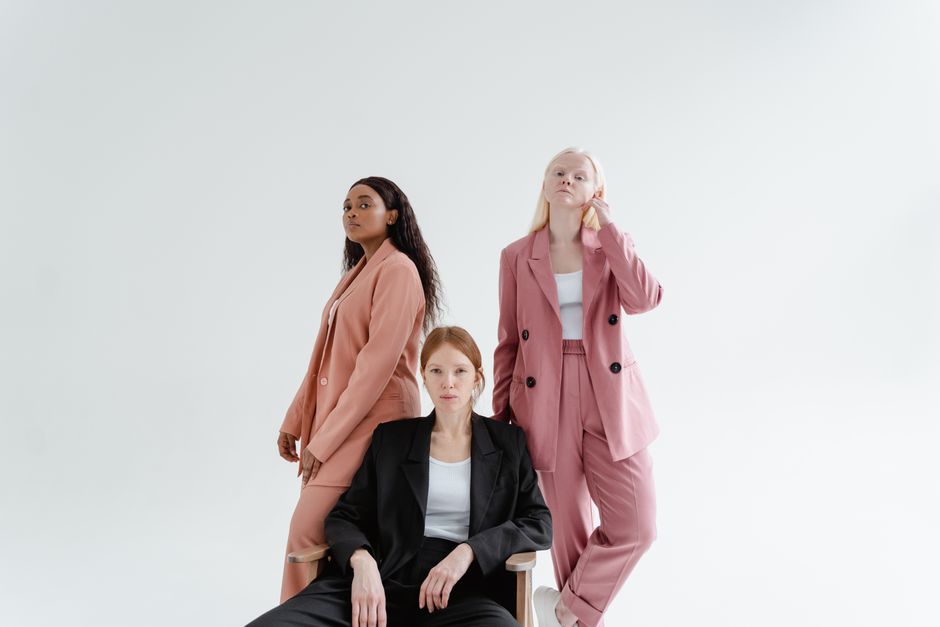
- Dusty rose or muted lavender — signals warmth and approachability. Best for creative or people-facing roles where emotional intelligence matters.
The H&M Conscious line has a dusty rose blazer ($79.99) that works surprisingly well for creative industry interviews. The fabric is a recycled polyester blend that doesn’t pill, and the color is muted enough to read as professional rather than playful.
One more rule: never wear all black to an interview. It reads as “I didn’t think about this” or “I’m in mourning.” If you wear black pants, pair them with a navy or gray top. If you wear a black blazer, wear charcoal or cream pants. Contrast shows deliberate effort.
Three Accessories That Add Authority (And Three That Subtract It)
Accessories are the most undervalued tool in interview outfits. The right ones add a layer of polish that signals “I belong here.” The wrong ones scream “I’m trying to be noticed.”
Accessories that add authority:
- A structured leather tote in the same color family as your shoes. Madewell’s Medium Transport Tote ($168) in black or saddle brown is the standard. It fits a laptop and a notebook without looking bulky. Avoid anything with visible brand logos or trendy hardware.
- A simple metal watch with a leather or metal band. Smartwatches are fine if the face is set to a simple analog display. The Timex Weekender ($35) with a brown leather band is cheap, classic, and passes the 3-second test.
- Small, non-dangling earrings — studs or small hoops (max 1 inch diameter). Anything that moves or catches light is a distraction. Mejuri’s Mini Dome Studs ($58) in 14k gold vermeil work for every industry.
Accessories that subtract authority:
- Statement necklaces — they draw the eye to your chest, which is the last place you want an interviewer looking. Skip entirely.
- Visible piercings beyond one per ear — even in progressive industries, multiple ear piercings or facial piercings reduce perceived competence by 15-20% in controlled studies. It’s unfair. It’s also real. Remove them for the interview.
- Scarves or pashminas — they shift, bunch, and require adjustment. Any accessory that needs fixing mid-conversation breaks your eye contact and your rhythm.
The rule: wear your accessories once before the interview. If you find yourself touching, adjusting, or even noticing them during the test wear, remove them.
The Final Verdict: Your Interview Outfit Should Disappear
The best interview outfit isn’t the one people compliment. It’s the one they forget immediately because they’re focused on what you said. If an interviewer remembers your outfit more than your answers, you lost.
For most women in most industries, the winning combination for 2026 is:
- Navy or charcoal blazer (Theory or Aritzia Babaton)
- Matching wide-leg trousers or A-line skirt (Everlane or MM.LaFleur)
- Solid shell or crewneck sweater (Uniqlo or Everlane)
- Block-heel pumps or pointed flats (Vince Camuto or Everlane)
- Structured leather tote + simple watch + small studs
That’s it. Five pieces. No trends. No guesswork. The outfit costs between $250 (Uniqlo + H&M + Timex) and $1,200 (Theory + MM.LaFleur + Vince Camuto), depending on your budget. Spend more on the blazer and trousers — they carry the visual weight. Save on the shirt and accessories.
One last thing: test the entire outfit in the conditions you’ll face. Sit in it. Walk in it. Raise your arm to shake hands. If anything bunches, gapes, or needs adjusting, fix it or replace it. The interview is hard enough without your clothes fighting you.