
The boots you reach for most mornings are almost never the ones that cost the most. Look inside any serious boot collection and the pattern holds — the $1,200 statement pair stays wrapped in tissue paper while the scuffed $280 leather ankle boots do actual work. Six hundred dollars is not a budget ceiling in any limiting sense. At this price, you cross into leather that softens with wear instead of cracking under stress, soles that a cobbler can replace, and silhouettes that outlast five-plus years of trend cycles without looking dated.
The problem is that the range from $0 to $600 is enormous. A $79 faux-leather ankle boot and a $540 full-grain leather riding boot are both technically “under $600.” Knowing where your money changes the boot — and where it doesn’t — is what separates a smart purchase from one you regret by spring.
What $600 Actually Buys You: A Price-Tier Breakdown
The quality jumps across boot price tiers are not linear. Moving from $80 to $160 often does more for durability than moving from $400 to $600. Understanding what shifts at each threshold makes it easier to stop treating this as one undifferentiated pool of money.
| Price Range | Upper Material | Sole Construction | Resoleable? | Expected Lifespan |
|---|---|---|---|---|
| Under $100 | Bonded leather or synthetic | Glued, thin rubber | No | 1–2 seasons |
| $100–$250 | Split leather or genuine leather | Cemented, thicker rubber | Rarely | 2–4 seasons |
| $250–$400 | Full-grain leather or quality suede | Blake stitch or cement | Sometimes | 4–7 seasons |
| $400–$600 | Full-grain leather, premium suede | Goodyear welt or Blake stitch | Yes | 7–12 seasons |
| Over $600 | Same + exotic skins | Same construction | Yes | 10+ seasons |
The critical jump is at $250. Below that line, most boots use bonded leather — material made from leather scraps compressed with polyurethane. It looks fine in photos and under store lighting. After six months of regular wear, it peels. Full-grain leather, which shows up reliably around $250, does the opposite: it develops a patina, absorbs conditioner, and gets better with use.
The second meaningful jump is construction method. Goodyear welt stitching — visible as a row of stitches around the perimeter of the sole — means a cobbler can replace the sole when it wears through. That changes the math entirely. A $490 boot you wear for ten years beats a $150 boot replaced every two years on both cost and environmental impact. Worth noting: the over-$600 tier uses the same construction and materials as the $400–$600 range. Above that ceiling, you are paying for exotic skins, Italian factory labor, or brand prestige. The functional difference narrows sharply once you clear $600.
Three Boot Silhouettes Worth Spending On — and One to Buy Cheap
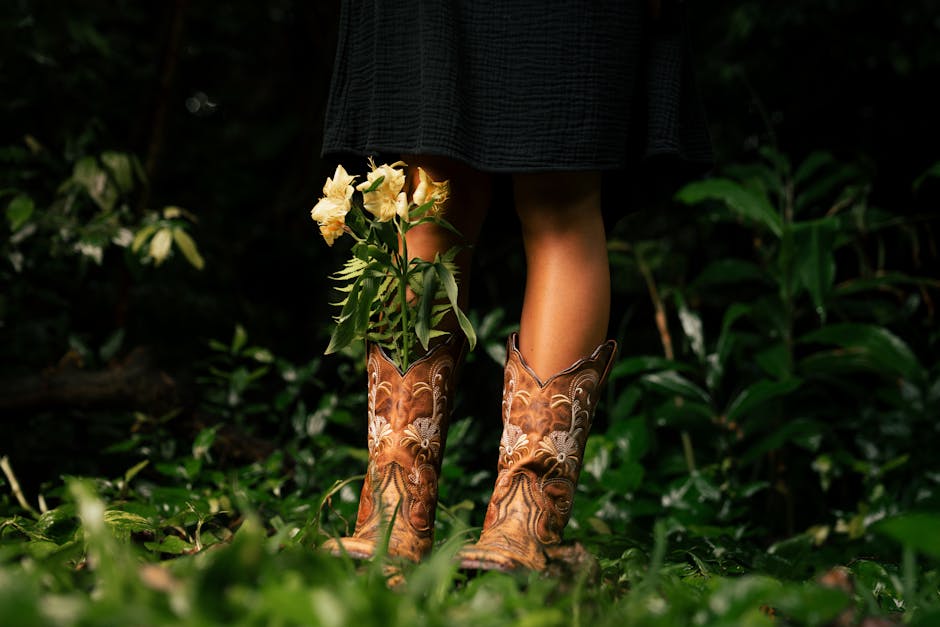
Not every boot shape rewards investment equally. Some styles work better at lower price points because they are trend-driven — you don’t want them for a decade anyway. Others are so foundational that quality construction pays for itself across years of daily use.
The ankle boot: highest frequency, highest stakes
Ankle boots pair with jeans, trousers, midi skirts, and dresses — which means a good pair gets worn 80-plus times per year without effort. That frequency is exactly why material quality matters more here than in any other silhouette. A boot worn that often will expose every weakness in a cheap upper within three months.
At the $130–$200 range, Dolce Vita’s Bax Chelsea (~$130) and Sam Edelman’s Circus line offer genuine leather options that hold their shape reasonably well for the price. For a more serious investment, the Thursday Boot Company Duchess at $199 uses full-grain leather and a cushioned cork footbed that molds to your foot over time. It’s one of the clearest value propositions in women’s footwear right now — direct-to-consumer pricing cuts out retail markup and puts the savings into materials instead of margin.
One note on heel construction at this price tier: block heels perform better than stilettos below $300 because the structural mechanics are simpler. A $200 stiletto ankle boot is often a worse investment than a $200 block-heel version. The thin heel cap wears out quickly, replacement is expensive, and the load on cheap materials is higher. If you want a stiletto heel, spend toward $350–$500 where the internal heel reinforcement is actually adequate.
The Chelsea boot: the one that transfers across every season
Chelsea boots have been the same silhouette since the 1960s. Slip-on, elastic side panels, clean profile. They move through fall, winter, and shoulder seasons without adjustment and pair with everything from tailored trousers to oversized knits. The longevity of the silhouette is exactly why spending more on a Chelsea makes sense — you’re not buying into a trend with an expiration date.
Blondo’s Villa Waterproof Chelsea Boot at around $150 adds weather-sealing without sacrificing the clean aesthetic. The waterproofing is built into the leather treatment, not sprayed on after the fact, which makes a real difference in performance after a few months of use. Cole Haan’s Juliana Chelsea Boot (~$280) uses cushioning technology in the sole that is noticeable if you are on your feet for six or more hours. That comfort premium is specifically worth it for workday wear.
The knee-high riding boot: invest or skip entirely
Marc Fisher’s Alida Tall Boot (~$220) is the best option under $300 for a classic riding silhouette. Above that, Frye’s Melissa Button Boot at ~$378 uses hand-burnished leather that ages beautifully and comes in three calf widths — standard, wide, and extra-wide — which is rare and worth the premium for anyone who has struggled with the shaft-gap problem. The silhouette to skip at high price points: extreme-platform lug-sole tall boots, square-toe Western styles with exaggerated proportions, any trend-forward variation on a classic shape. These cycle in and out every 18–24 months. Spending $450 on a pair you’ll retire in two seasons is poor math regardless of material quality.
The Brands Worth Buying — and One to Approach Carefully
Thursday Boot Company is the clearest answer at the $150–$250 range. Full-grain leather, Goodyear welt construction on most styles, and direct-to-consumer pricing that puts the saved retail margin into better materials rather than advertising budgets. The Duchess ($199) and the Duchess in suede ($229) are both genuinely excellent. No meaningful caveats.
At $250–$400, Frye is the most consistent brand. The Melissa series has been in continuous production for decades, which is its own quality signal — a product that gets discontinued has typically failed to earn return customers. Frye’s quality does vary by style, though. Their leather ankle and riding boots outperform the synthetic-lined tall boots. Check the material description rather than buying on brand name alone.
At $400–$600, Cole Haan and Franco Sarto compete for different buyers. Cole Haan prioritizes comfort engineering — the Grand.ØS cushioning system is real and measurable, not a marketing claim. Franco Sarto prioritizes aesthetics at lower price points and occasionally cuts corners on lining materials. For all-day wear, Cole Haan wins. For evening boots worn four hours at most, Franco Sarto delivers the look at a fair price.
Approach Steve Madden carefully. Their $90–$140 boots photograph well and reviews skew positive because most reviewers don’t wear them long enough to see bonded leather begin to peel. As a single-season purchase for a trend piece, they are acceptable. As a multi-year investment, they consistently underperform what the price tag implies. Their bonded leather construction is the central issue, and no amount of good styling changes the material’s ceiling.
Four Buying Mistakes That End Up Costing More Than $600
- Treating “genuine leather” as a quality marker. Genuine leather technically comes from an animal hide but sits at the lowest processing grade — it behaves nearly like synthetic in real-world wear. The descriptions to look for are “full-grain” or “top-grain.” If a product listing says only “leather upper” without specifying grade, assume it is not full-grain. Brands that use full-grain leather say so prominently because it costs them more to source.
- Ordering tall boots without measuring your calf circumference. Most standard knee-high boots are cut for a 14–15 inch calf. If you fall outside that range, the boot will gap at the top or cut into the calf regardless of quality. Frye, Naturalizer, and Torrid each offer wide-calf options with explicit shaft measurements listed. Check the number against your actual measurement — the size label tells you nothing about calf fit.
- Skipping the leather conditioning step. Full-grain leather boots require 5–15 wears to conform to your foot shape. Many women return good boots after two wears because they feel stiff. This is not a defect — it is how the material works. Apply a leather conditioner like Leather Honey ($15 for a 4-ounce bottle) before the first wear. It accelerates break-in and prevents early cracking along flex points.
- Anchoring to the sale price instead of the cost-per-wear. A $180 boot at 40% off sounds like a win. If it lasts one season of regular wear, the cost per wear is high. A $380 full-grain leather boot worn across three seasons per year for eight years costs roughly $0.35 per wear. Run that math before the purchase, not after the return window closes.
How to Read Boot Construction Before You Commit
How do I tell full-grain leather from bonded leather when shopping in person?
Bend the upper material between your fingers. Full-grain leather creases naturally and recovers slowly but completely. Bonded leather shows stress marks along the crease and does not recover to its original shape. Also inspect the cut edges on the interior of the boot — genuine full-grain leather has a slightly rough, organic edge where it was cut from a hide. Bonded leather edges are perfectly uniform because the material is pressed and formed from scraps, not cut from a single piece.
What does good sole construction look like on the shelf?
On a quality boot, look for visible stitching along the welt — the strip connecting the upper to the sole. Goodyear welt construction shows a row of stitches running around the entire perimeter. Blake stitch shows a single row stitched through the center insole. Both methods allow resoling. A boot with no visible stitching and a smooth, sealed edge has a cemented sole — glued, not stitched — and cannot be resoled when the rubber wears through. That is a permanent disposal situation.
Does lining material change how long the boot actually lasts?
Yes, more than most buyers expect. Leather lining absorbs moisture from your foot and extends the boot’s interior life significantly. Synthetic lining traps moisture, breaks down faster, and increases foot odor over time. At the $300+ price point, leather lining should be standard. Below that, it is worth checking specifically rather than assuming. Brands that use leather lining treat it as a selling point and list it prominently — if you do not see it mentioned, the lining is almost certainly synthetic.
The Final Verdict: One Boot Per Real Need Under $600

For daily office or hybrid-schedule wear: Thursday Boot Company Duchess at $199. Full-grain leather, comfortable from the second week onward, and works as well with tailored trousers as with straight-leg jeans. This is the right answer for most people searching this topic.
For cold, wet winters: Blondo Villa Waterproof Chelsea at $150. The waterproof treatment is integrated into the leather, not sprayed on afterward. It handles real slush without leaving water stains or soaking through.
For long days on your feet — conferences, travel days, anything past the six-hour mark: Cole Haan Juliana Chelsea Boot at $280. The cushioning difference is the most noticeable comfort upgrade in this entire price range, and comfort is where cheap boots always lose.
For a riding boot worth keeping a decade: Frye Melissa Button Boot at $378. The leather quality at this price is difficult to beat, Frye’s resoling service means the boot outlives its first sole, and three calf widths means a genuine fit for more body types than most brands attempt.
These four boots together cost just over $1,000 at full retail — more than the $600 ceiling. But each one replaces multiple cheaper pairs across a ten-year period. That is the actual promise of the right boots under $600: they stop being a budget decision and start being something you reach for every morning without thinking about it.