You have a white T-shirt, straight-leg jeans, and a dinner reservation after work. The outfit looks fine, but it feels unfinished. You open a jewelry site with $200 to spend and face hundreds of nearly identical gold hoops, chains, rings, and pendants. Some pieces cost $25. Others cost $180. The photos make every one look expensive.
The smart purchase is not the shiniest piece or the one with the biggest discount. It is the piece that matches your daily clothes, uses a material you can live with, and solves a real styling problem. These six myths explain how to choose everyday gold jewelry under $200 without wasting your budget.
Why everyday gold jewelry changes an outfit
Gold is a visual frame, not the main event
Everyday jewelry exists because clothing does not always provide enough contrast near the face and hands. A plain knit top has one large uninterrupted surface. Small gold earrings break that surface near the eyes. A short chain creates a clean line at the collarbone. A narrow ring adds a point of light when your hands move.
That is the first principle of styling gold jewelry: the piece should give the outfit structure without competing with it. The best daily jewelry is easy to see at normal speaking distance. It does not need a large pendant, a thick chain, or several stones to earn its place.
Scale matters more than price
A $40 pair of slim hoops can look more polished than a $180 oversized pair if the smaller shape suits your haircut, neckline, and frame. Start by matching scale to the clothing. A crew-neck sweater supports a short pendant or medium hoops. A deep V-neck works with a longer chain. A crisp button-down can handle a collar-hugging chain plus small studs.
Use one focal point at a time. If the earrings are wide, keep the necklace fine. If the pendant is bold, choose a plain ring and skip a busy bracelet. This creates contrast without making the outfit feel assembled in front of a mirror.
The best everyday gold jewelry is repeatable. You should be able to wear it with denim, tailoring, knitwear, and a simple dress. If a piece only works with one outfit, it belongs in the occasion-jewelry budget, not the daily $200 budget.
Gold plating, vermeil, and solid gold compared

Material labels explain why two gold-colored pieces can have very different prices and lifespans. They also reveal the biggest shopping trap: gold color does not automatically mean gold content. Read the base metal, the gold layer, and the care instructions before you compare designs.
Use this material guide before buying
| Material | What it means | Typical under-$200 use | Main tradeoff |
|---|---|---|---|
| Gold-tone or gold-colored | The surface looks gold, but the listing may not state a meaningful gold layer | Trend pieces and occasional wear | Material details can be vague |
| Gold plated | A thin layer of gold sits over a base metal such as brass or stainless steel | Necklaces, bracelets, fashion rings | Friction, sweat, and water can wear the surface |
| Gold vermeil | A thicker gold layer covers sterling silver | Daily earrings, pendants, and stacking rings | Still needs care and can fade at high-friction points |
| 10K or 14K solid gold | Gold is part of the metal throughout the piece, mixed with stronger alloys | Small hoops, studs, chains, and simple rings | Less metal weight and fewer decorative details at this budget |
For most shoppers, gold vermeil is the sweet spot for a visible necklace or ring under $200. It gives you a sterling-silver base and a more substantial gold surface than standard plating. For earrings, solid 14K gold often offers the best long-term value because earrings face skin contact, hair products, and repeated handling.
Do not treat karat as a durability score by itself. Higher karat gold contains more pure gold, but a delicate 18K chain can still bend or snap. A well-made 14K hoop with a secure closure may serve you better than a fragile higher-karat design.
How to choose a wearable gold jewelry capsule
Build the collection in an order that solves daily gaps. Buying three attractive pieces at once often creates a drawer full of items that do the same job.
- Start with earrings. Choose a pair that works with your haircut and stays comfortable for eight hours. Small hoops between 12mm and 18mm suit most casual and office outfits. Studs are the safer choice if you wear glasses, large collars, or over-ear headphones.
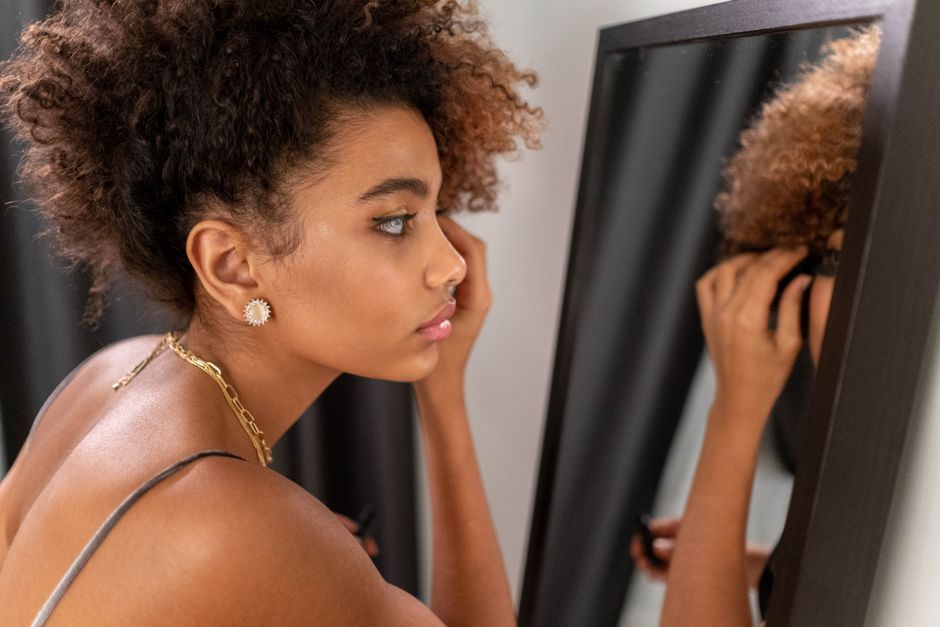
- Add one neckline piece. Pick a chain length based on your clothes. A 16-inch necklace sits close to the collarbone. An 18-inch chain usually works with crew necks and open shirts. A 20-inch pendant creates a longer vertical line over a plain top.
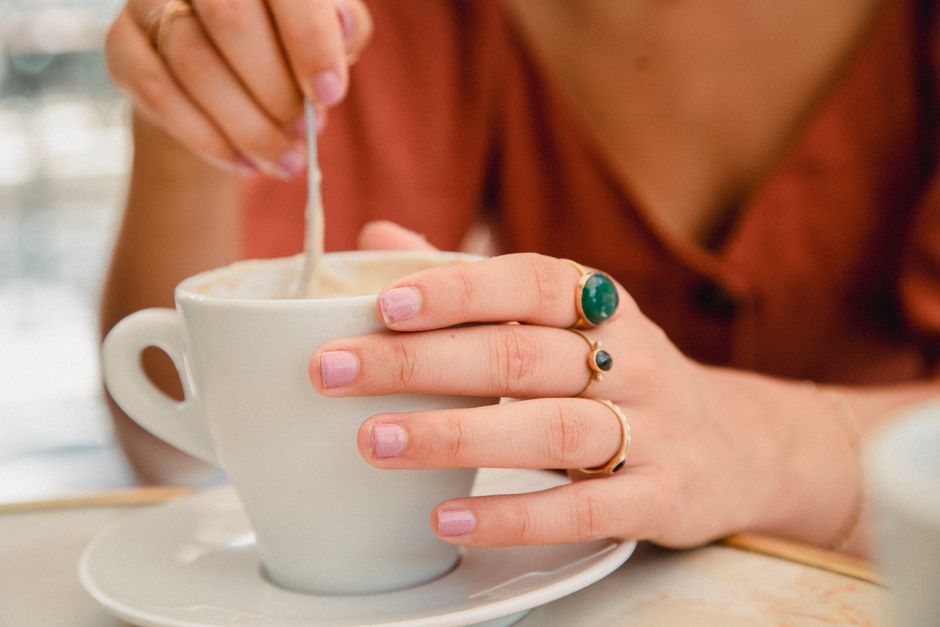
- Choose one hand detail. A slim band or signet ring adds polish without making every gesture look decorated. Measure your finger , when it is slightly larger, and avoid buying a ring that feels tight in warm weather.
- Leave room in the budget for a different texture. Three smooth gold pieces can look flat together. Add one brushed, hammered, pearl, enamel, or stone detail rather than buying another plain chain.
- Test the outfit before adding a fourth piece. Put on the full stack with your most-worn jacket, bag, and watch. If the jewelry disappears, increase one piece in size. If the outfit feels noisy, remove the smallest item first.
Use a simple proportion rule
Keep the visual weight balanced across the face, neck, and hands. Medium hoops with a fine chain and one narrow ring create an easy starting point. A chunky necklace needs quieter earrings. Several delicate chains need one pendant or charm to prevent the layers from blending into a thin gold line.
For mixed metals, repeat the second metal at least twice. A gold chain with a silver watch can look intentional when silver also appears in a ring or bracelet. One isolated silver item often looks accidental.
Which under-$200 gold pieces are worth buying
My strongest recommendation is to spend first on earrings you can wear five days a week. They stay visible when coats cover your clothes, and a solid-gold pair can outlast several trend purchases. Put the remaining money into one necklace that adds a different shape.
Best solid-gold starting point
The Quince 14K Gold Everyday Hoops cost $108 at the listed 18mm size. They use hollow 14K gold flex tubing, measure 1.25mm wide, and close with a thread-through design. The 18mm diameter is large enough to show with loose hair but restrained enough for work clothes. Quince also lists 14mm and 25mm sizes. Choose 18mm for the most useful single pair.
Best vermeil option for a polished stack
The Mejuri Dôme Huggies are listed at $128 in 18K gold vermeil. Their rounded shape has more visual weight than a flat wire hoop, so they work well with a fine chain and a plain ring. Choose these if your style is modern and clean. Choose the Quince hoops if you want a lighter, more traditional profile.
Best necklace choices under $100
The Gorjana Tatum Necklace is listed at $75 to $80 in 18K gold plated finishes, with 16-inch and 19-inch options. The adjustable lengths make it useful for layering, and the simple line will not fight with patterned tops. It is the best choice for a low-risk daily necklace, but remove it before swimming or showering.
The Ana Luisa Pebble Mini Gold Pendant Necklace is listed at $75. Its small pendant gives a plain T-shirt more focus than a bare chain while staying casual. For a stone detail, the Mejuri Round Lab Grown Sapphire Necklace is listed at $128 in 18K gold vermeil with a lab-grown white sapphire. That is the better pick for dinners, office outfits, and simple black dresses.
For a smaller statement, the Ana Luisa Elise Pendant is listed at $55. It works as a short solo pendant and costs little enough to leave more of the budget for solid-gold earrings. Prices can change with sales, membership offers, and region, so confirm the material and final price before checkout.
How should you style and care for daily gold jewelry?
How many pieces should you wear at once?
Start with two pieces, then add a third only when it changes the balance. Earrings and a necklace are enough for most daytime outfits. Add a ring or bracelet when the sleeves are short or the outfit has a simple silhouette. The goal is a clear visual rhythm, not maximum coverage.
Can you mix gold jewelry with silver?
Yes, but use a bridge. A two-tone watch, mixed-metal ring, or small silver charm can connect the colors. Keep one metal dominant, usually around 70 percent of the visible pieces. Gold hoops, a silver watch, and a thin gold ring look intentional because the gold still controls the outfit.
How do you keep gold jewelry from looking cheap?
Keep surfaces clean, remove pieces before swimming, and store chains flat or hung separately. Sunscreen, perfume, chlorine, and hair spray can dull plated surfaces. Wipe jewelry with a soft dry cloth after wearing it. Never scrub vermeil with toothpaste or a rough polishing cloth.
Also check the clasp and edges when the piece arrives. A sharp pendant corner, loose stone, rough earring post, or weak spring closure will annoy you more than a slightly less fashionable shape. For daily wear, comfort is part of style.
When should you skip gold jewelry under $200?
Do not buy plated pieces for high-friction routines
Skip standard gold plating if you want to wear the same bracelet while lifting weights, washing dishes, swimming, and sleeping. The repeated rubbing and moisture will shorten its good-looking phase. Choose solid gold for a piece that never leaves your body, or choose a less expensive plated design and treat it as an accessory you rotate.
Avoid buying the wrong version of a good design
Do not spend $160 on a delicate ring when your real priority is a necklace. Do not buy a 25mm hoop because it looks dramatic online if you usually wear your hair down and small collars. Do not choose gold vermeil if you react to the base metal and the seller does not explain the alloy or return policy.
- Skip rings with no clear size information.
- Skip necklaces with no stated length or extender.
- Skip pieces that hide the base metal behind vague words such as premium finish.
- Skip a trend shape if you cannot name at least three outfits you will wear with it.
The best $200 jewelry purchase is often one solid, repeatable piece rather than a full matching set. As everyday gold jewelry becomes more personal and less uniform, the strongest collections will mix material quality with small signs of character: a useful hoop, a meaningful pendant, and a stack that looks like it belongs to the person wearing it.