You’ve been to the girls night where everyone shows up, sits on the couch, spends 40 minutes scrolling Netflix, and ends up watching something nobody actually wanted. That’s not the one you’re throwing. Here’s how to do it differently.
Pick a Theme Before You Pick Anything Else
A theme isn’t about being over-the-top or obsessively Pinterest-planned. It’s about giving the night a direction so every decision becomes easier. No theme means three hours of “what do you want to do?” A clear theme means everyone knows what to wear, what to bring, and what to expect when they walk in.
Here’s how different themes actually play out:
| Theme | Best Group Size | Prep Time | Ideal For | What You Need |
|---|---|---|---|---|
| Spa Night | 3–4 people | 1–2 hours | Low-energy reset nights | Face masks, robes, candles, nail polish |
| Cocktail Masterclass | 4–6 people | 2–3 hours | Groups that want to actually do something together | Spirits, cocktail shakers, recipe cards, garnishes |
| Fashion Styling Night | 3–5 people | 30 minutes | Fashion-forward friend groups | Everyone brings 3 outfits to style each other in, a camera |
| Game Night | 6–10 people | Minimal | Larger groups, competitive friends | Card games, party games, plenty of snacks |
| Movie Marathon | Any size | Minimal | Tired group that just wants to be together | Pre-planned film list, blankets, good snacks |
For fashion readers, the styling night is genuinely underrated. Everyone brings pieces they love but never wear, or recent buys they haven’t figured out how to style yet. You rotate, style each other, photograph the results, and talk the whole time. The conversation writes itself.
How to Communicate the Theme Without Making It Weird
Send one clear message at least five days out. Not a vague “girls night this Friday” — something specific: “Spa night Saturday at 7pm. Bring your favorite face mask and I’ll handle drinks and snacks.” Three sentences. It answers what to bring, when to show up, and what to expect. People can plan around a specific ask. They cannot plan around ambiguity.
When NOT to Do a Theme
If you’re mixing friend groups who don’t know each other well, skip the structured theme entirely. A fixed activity in an already socially tense situation creates pressure instead of releasing it. In that case, go food-first: a great grazing board and strong drinks do more social work than any icebreaker game or scheduled activity ever will.
Food and Drinks That Feel Like Someone Actually Thought About It
This is the area most hosts underinvest in. Chips and whatever wine is on sale is fine. It’s not memorable. The food doesn’t have to be complicated — it just has to feel considered. There’s a real difference between throwing snacks on a coffee table and building a setup that makes people feel genuinely taken care of.
Build a Grazing Board Instead of a Meal
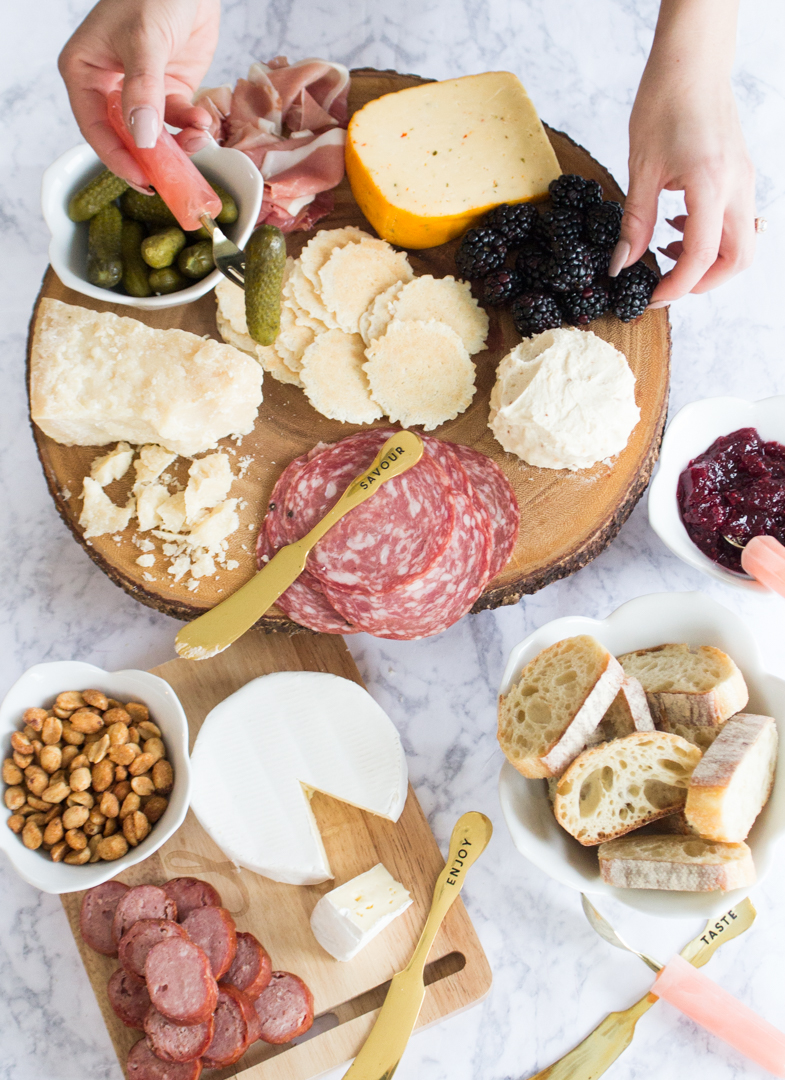
A grazing board works because it gives people something to do with their hands while talking. Nobody has to sit down at a table, nobody has to eat on a schedule, and it looks impressive with minimal effort.
The formula: two to three cheeses (one creamy like brie or burrata, one aged like manchego, one interesting like truffle gouda), two to three meats if not going vegetarian, crackers in different textures, fresh fruit, nuts, and something sweet — dark chocolate or a small bowl of honey. For five to six people, you’re spending $40–60 at Trader Joe’s or Whole Foods.
Add small bowls of Castelvetrano olives, cornichons, and marcona almonds. These feel elevated and cost almost nothing per serving. The detail that separates a good board from a great one is filling the visual gaps — dried apricots, figs, or grape clusters placed between the bigger items. It looks full and curated without much extra cost or effort.
The One-Cocktail Rule
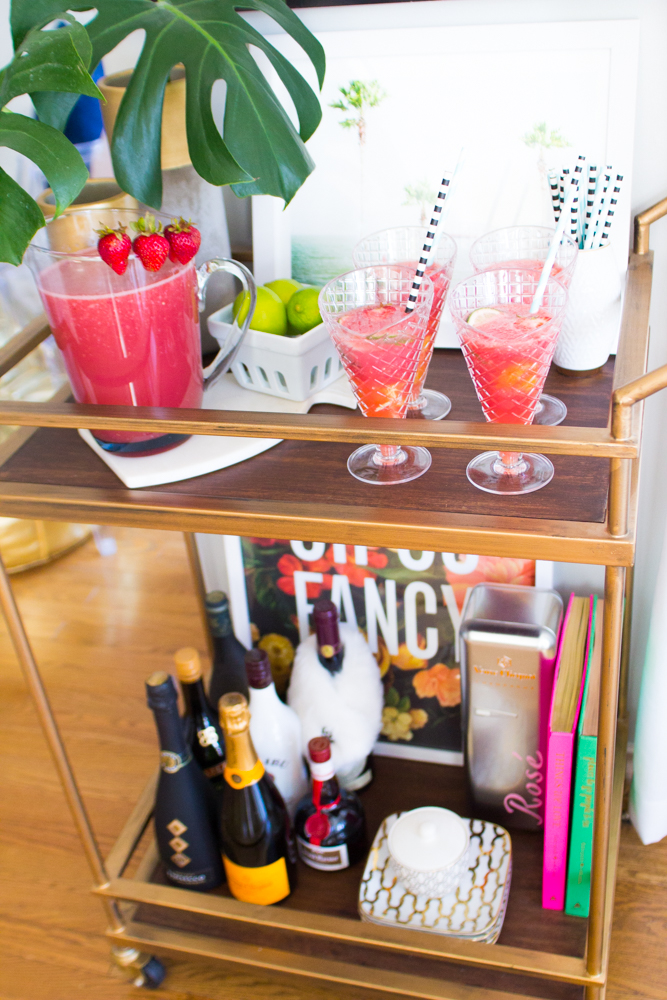
Pick one signature cocktail and make a batch. Not a full bar setup — one drink everyone’s having. It simplifies your prep, creates a cohesive vibe, and means you’re not playing bartender all night.
The Aperol Spritz is the easy go-to: 3 parts Aperol, 2 parts Prosecco, 1 part soda water, poured over ice with an orange slice. A 750ml bottle of Aperol runs about $25, and two bottles of Prosecco ($15–20 each) covers 8–10 drinks comfortably. Batch the Aperol and soda ahead of time so you’re just adding Prosecco per glass once guests arrive.
Want something less expected? The Hugo Spritz — St-Germain Elderflower Liqueur ($35), Prosecco, soda water, fresh mint, and lime — is more interesting and equally simple. St-Germain goes a long way, and the floral scent makes it feel deliberate without requiring any real cocktail skill.
Don’t Forget the Non-Alcoholic Option
At least one person in your group probably doesn’t drink or is taking a break. Sparkling water is not a real option — it reads as an afterthought. Make a separate pitcher of something that looks as intentional as the cocktail: hibiscus agua fresca (steep dried hibiscus flowers in hot water, cool, add lime and honey), or a sparkling juice with mint and frozen fruit. Serve it in the same glassware as the cocktails. Don’t make a big deal of it. Just have it there, ready, without anyone having to ask.
Activities That Keep the Energy Moving Without Overscheduling
The biggest risk isn’t boredom — it’s dead air. A 20-minute lull where everyone’s on their phones kills the momentum faster than anything else. The fix isn’t cramming the schedule full of planned activities. It’s having a few options ready to pull out naturally when the conversation pauses.
- Skin care rotation. Buy four or five masks and let everyone choose one. Glow Recipe’s Watermelon Glow Sleeping Mask ($45 at Sephora) and the Tatcha Violet-C Radiance Mask ($68 at Tatcha.com) are crowd favorites — but the $4 Garnier SkinActive Moisture Bomb masks from any drugstore work perfectly as a group activity. Apply them together, take photos while they’re setting, and talk for 15 minutes. It’s a built-in social pause that never feels forced.
- A playlist you actually built. Not autoplay. Not Spotify’s algorithm picking for you. Build a two-hour playlist beforehand — it signals effort and sets the tone without you managing it once it starts. Mix Chappell Roan, MUNA, some late-2000s R&B throwbacks, and a few tracks the group doesn’t know yet. Music is the detail people feel but don’t consciously register, and it does quiet work all night.
- One card game as backup. We’re Not Really Strangers ($30, Amazon) works for close friend groups who want deeper conversation. What Do You Meme? ($30) works if you want chaos and genuine laughter. Have one ready on the shelf. Don’t announce it at the start — bring it out when the vibe naturally calls for it.
- A Polaroid moment. At some point in the evening, gather everyone for two or three Polaroid shots. The Polaroid Now camera ($99) and the Fujifilm Instax Mini 12 ($79) both do the job well. Everyone goes home with a physical photo. This is consistently the single detail people mention when they talk about the night afterward.
- The “current obsession” round. Ask everyone to come with one thing they’re currently obsessed with — a product, a song, a show, a strange fact, anything. Go around the room. You learn something new every time, and it gives the quieter people in the group an easy, natural on-ramp into the conversation.
Two to three anchors is the right amount. The best girls nights feel spontaneous — even when they weren’t.
The One Thing That Kills Girls Nights
Trying to please everyone equally. Pick what you’re most excited about and commit to it fully. The host who says “I don’t care, what does everyone want?” creates a night where nobody’s actually excited about anything. The host who says “we’re doing a spa night, here’s what I need from you” creates an event people actually show up to with energy.
The Aesthetic Details That Turn Your Apartment Into a Setting
Fashion readers already know this: the environment shapes how people feel before anyone says a word. You don’t need to redecorate. You need three intentional choices that shift the room’s energy entirely.
What Lighting Actually Changes
Turn off your overhead lights. Completely. Replace them with two or three layered sources: a floor lamp on its lowest setting, warm-toned string lights draped somewhere low, and one or two candles on the coffee table. The difference is immediate. Overhead lighting makes any space feel like a waiting room. Low, layered light makes the same room feel like somewhere you want to stay.
For candles: the Byredo Gypsy Water large candle ($95) smells like bergamot, juniper, and vanilla — exactly what a well-considered night should smell like. It’s expensive but lasts multiple evenings. If $95 is the wrong number, the Boy Smells Kush candle ($38) is genuinely good and burns clean. Scent is the detail guests won’t consciously register but will feel throughout the entire evening.
What to Put on the Coffee Table
Clear the clutter first. Then put out: a tray with the face masks and skincare products for the evening, the grazing board within comfortable reach, and one or two intentional objects — a stack of fashion magazines, a small grocery store bouquet ($8–12), or a few well-chosen things that aren’t remote controls and charging cables. You’re editing, not decorating. Restraint is always the right call here.
The First Five Minutes Set the Whole Tone
Play music from the moment the first guest walks in. Not “give me a second to find something” — music already on, already at the right volume before the door opens. Put something in their hands within 30 seconds of arriving: a drink, a snack, a mask to choose from. The first five minutes of any gathering set the emotional temperature for everything that follows. Make those minutes active, not awkward.
One more thing on the sensory side: body products as part of the spa moment go further than face masks alone. Sol de Janeiro Brazilian Bum Bum Cream ($48 at Sephora) — the pistachio-coconut scent alone starts conversations. A tester of Glossier You perfume ($87) that everyone can try on skin. These small sensory experiences are what make a night feel like an event rather than just an ordinary hang.