
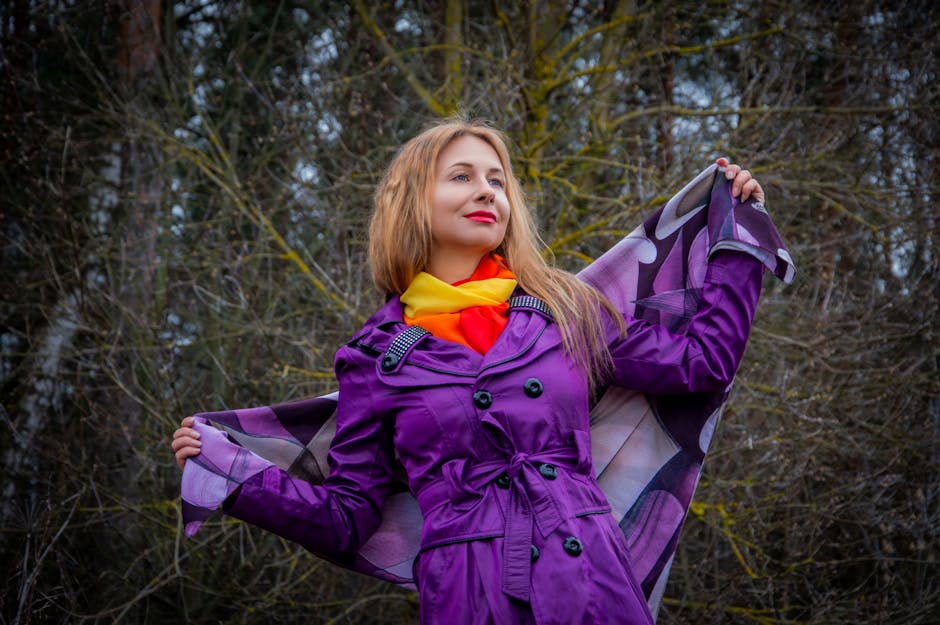
Does your perfectly tied scarf slowly unravel throughout the day, leaving you looking less put-together and more like you wrestled a fabric snake? You start the morning with a chic, secure knot, only to find it a floppy mess by lunchtime. It’s a common frustration. A scarf should elevate your outfit and keep you warm, not demand constant readjustment. The secret isn’t just in how you tie it, but in understanding the "joint settings" – the specific techniques and considerations that create lasting hold. It’s about more than just looping fabric; it’s about choosing the right method for your scarf, your outfit, and your day.
Many people struggle with scarf slippage because they overlook key factors like fabric texture, scarf dimensions, and the inherent properties of different knots. You might be using a knot designed for a grippy wool on a slippery silk, or a delicate tie where you need maximum security. This guide cuts through the guesswork. We’ll explore why some scarves seem to have a mind of their own, then equip you with specific, reliable scarf joint settings that ensure your accessory stays exactly where you want it. No more fuss, just effortless style that lasts.
Why Your Scarf Never Stays Put
It’s not just you. Scarves have a knack for unraveling, and often the blame falls on physics more than tying skill. Understanding the core reasons for slippage is the first step to mastering secure scarf joint settings. Think about it: you’re moving, stretching, walking, and sometimes even battling a breeze. Each action exerts force on your scarf, testing the integrity of its knot.
Understanding Fabric Friction and Texture
The material of your scarf plays a massive role in its staying power. Smooth fabrics, like polished silk or satin, inherently have less surface friction. This means they glide against themselves and your clothing with ease. While this creates a beautiful drape and luxurious feel, it also makes them prone to slipping out of looser knots. Imagine trying to tie a rope with perfectly smooth, oiled surfaces – it wouldn’t hold well. That’s the challenge with many elegant silks.
On the flip side, fabrics with more texture, such as wool, cashmere, cotton, or linen, offer greater friction. Their fibers have a natural "grip" that helps them interlock and hold knots more securely. For instance, a fine merino wool scarf, even if relatively smooth, still possesses microscopic scales on its fibers that create resistance. A chunky knit wool scarf, with its highly textured surface, provides even more friction, making it a dream for secure knots. The tighter the weave, generally, the more stable the fabric. A crisp cotton twill will hold better than a loosely woven rayon blend.
Common Tying Mistakes That Lead to Slippage
Beyond fabric, your technique can inadvertently contribute to scarf drama. One prevalent mistake is simply not tightening the knot enough. Many people tie scarves too loosely, perhaps to avoid a constricted feeling or to achieve a relaxed look. However, a loose knot provides ample room for the fabric to shift and work its way free. The initial tension is critical for any scarf joint setting to hold.
Another common error involves choosing a knot that isn’t suited to the scarf’s length or weight. Trying to force a complex, multi-loop knot on a short, light scarf often results in a bulky, unstable mess. Conversely, using a simple, single-loop knot on an extremely long or heavy scarf can leave too much fabric hanging, creating an imbalance that pulls the knot open. Forgetting to "lock in" the knot by tucking ends or creating a small, tight base is also a frequent oversight. Many simple loops, like the basic "once-around," don’t have inherent locking mechanisms, making them vulnerable to everyday movement.
Essential Scarf Joint Settings for Daily Wear

Now that we’ve covered the pitfalls, let’s explore the reliable methods. These scarf joint settings are tried-and-true for everyday wear, balancing security with style. They prioritize staying power, so you’re not constantly fussing with your neckline.
-
The Refined Parisian Knot
The Parisian Knot is a classic for a reason: it’s simple, elegant, and offers excellent security, especially for scarves with some natural grip. It works best with scarves measuring between 55 and 75 inches (about 140-190 cm) in length and a medium width (10-14 inches or 25-35 cm).
How to tie: Fold your scarf in half lengthwise. Drape it around your neck, so the loop is on one side and the two loose ends are on the other. Feed both loose ends through the loop. Pull them through, then adjust the tension by pulling the loop closer to your neck. The key to its security lies in cinching the loop firmly but comfortably against your neck. The friction of the two ends passing through the closed loop creates a natural lock. This method is incredibly versatile and pairs beautifully with a medium-weight cashmere blend scarf, like those from **Uniqlo**, or a woven wool scarf from a brand like **Mango**. It provides substantial warmth without excessive bulk.
-
The Double Wrap with Hidden Knot
When you need maximum warmth and an unshakeable hold, the Double Wrap with Hidden Knot is your go-to. This setting is ideal for longer scarves, typically 70 inches (178 cm) or more, and works exceptionally well with thicker, chunkier knits or substantial wools.
How to tie: Drape the scarf around your neck, letting one end hang significantly longer than the other. Wrap the longer end snugly around your neck, once or twice, depending on the scarf’s length and desired warmth. Once wrapped, you’ll have two ends hanging down. Take these two ends and tie them together in a small, tight double knot (like tying a shoelace) underneath the wrapped layers of the scarf. This hides the knot and locks the entire wrap in place. Adjust the outer layers to completely conceal the knot. This technique is fantastic for a soft, chunky knit from **& Other Stories** or a substantial lambswool scarf during the coldest months. It creates a plush, insulated collar that won’t budge, even in a strong wind.
-
The Loop-Through Security Knot
This variation on a simple loop adds an extra layer of security, making it perfect for slightly more slippery fabrics that still need to stay put. It works best with medium-length scarves (around 60-70 inches or 150-178 cm) that aren’t too bulky.
How to tie: Drape the scarf around your neck with one end slightly longer than the other. Create a small, loose loop on the longer side, near your chest, by overlapping the fabric. Take the shorter end and thread it *under* the top part of this loop, then *over* the bottom part, essentially weaving it through the loop. Pull both ends gently to tighten and adjust the loop up towards your neck. The weaving action creates resistance, making it much harder for the scarf to unravel compared to a simple loop. This is an excellent choice for a fine merino wool scarf, perhaps from **Acne Studios**, or a smoother cotton blend. The subtle interlock prevents the fabric from sliding easily, maintaining your desired look throughout the day.
Scarf Joint Settings for Specific Occasions: Warmth vs. Style
Different situations call for different scarf priorities. Sometimes you need maximum insulation, other times pure elegance. The right scarf joint setting acknowledges these trade-offs, ensuring your scarf serves its purpose perfectly. Here’s a breakdown of methods tailored to various needs.
| Scarf Joint Setting | Primary Benefit | Ideal Scarf Type | Security Level | Style Factor | Best For |
|---|---|---|---|---|---|
| The Once-Around | Maximum Warmth, Quick Application | Chunky knits, long wool (70+ inches/178cm) | Medium (can loosen) | Casual, Effortless | Outdoor activities, very cold weather, quick errands |
| The Faux Knot | Elegant Drape, Defined Look | Silk squares (20-35 inches/50-90cm), thin rectangles | Low (decorative, can untuck) | High, Sophisticated | Office, evening events, light layering over blouses |
| The Bandana Tuck | Neck Protection, Minimalist Style | Small squares (20-25 inches/50-63cm), cotton, silk twill | High (tucked in) | Casual, Utility, Retro | Casual outings, dust/sun protection, adding a pop of color |
| The Ascot Tie | Sophisticated Neckline | Medium silk (35-40 inches/90-100cm), thin wool | Medium-High (requires careful adjustment) | Formal, Business Casual | Business casual, smart evening wear, adding flair to a suit jacket |
| The Loop-Through & Over | Balanced Warmth & Security | Medium-weight wool, cashmere (60-70 inches/150-178cm) | High | Neat, Polished | Commuting, professional settings, everyday winter wear |
When selecting a scarf joint setting from the table above, consider the environment and your outfit. For a cold commute, prioritizing warmth with something like the Once-Around or Loop-Through & Over is critical. If you’re heading to a business meeting and want a polished look, the Faux Knot or Ascot Tie offers elegance but might not be the best for extreme weather. Each setting has its strong suits, and understanding these allows you to make an informed choice rather than just tying for the sake of it.
The Unsung Hero: Scarf Fabric’s Role in a Secure Joint

It’s a bold claim, but the fabric of your scarf is just as critical to its staying power as the knot you choose. You can master every tying technique, but if your scarf’s material works against you, you’ll still face slippage. Think of it as a foundation: a strong foundation makes any structure more stable. For scarves, the fabric provides that crucial foundation.
Understanding Different Fiber Structures
Fibers have distinct properties. Smooth silks, particularly charmeuse or satin weaves, are naturally slippery because their fibers are long, continuous, and have minimal surface irregularities. This creates a lustrous surface that glides against itself. While beautiful, this means they offer very little friction for a knot to grip. A classic **Hermès carrè** in twill silk, however, has a diagonal ribbed texture that offers significantly more grip than a slipperier satin. The twill weave itself creates more surface area and friction points.
In contrast, wools and cashmeres are composed of shorter, crimped fibers. These fibers have a natural "tooth" or texture that helps them interlock when pressed together, creating excellent friction. This is why a thick, woven scarf from a brand like **Burberry** or a fine cashmere piece from **Loro Piana** will naturally hold a knot better and feel more secure than a sheer silk. Even a fine merino wool, despite feeling smooth, retains enough fiber texture to offer superior grip compared to silk. Cotton and linen also possess good natural friction due to their plant-based fibers, making them versatile for many knot types, especially when woven into a slightly textured fabric.
Selecting the Best Fabric for Lasting Hold
When you’re shopping for scarves or choosing one from your collection, think about its intended use. For maximum security and warmth, especially in colder weather, prioritize scarves made from natural fibers like wool, cashmere, and textured cotton. These materials naturally "stick" to themselves and will hold a knot more reliably throughout the day. A chunky knit scarf or one with a brushed finish will offer exceptional grip.
If you love the luxurious feel and drape of silk or other smooth synthetics, don’t abandon them. Instead, pair them with the more intricate, self-locking scarf joint settings we discussed, like the Loop-Through Security Knot or the refined Parisian. These knots create tighter tension points that compensate for the fabric’s inherent slipperiness. You might also look for silk blends that incorporate a small amount of wool or cotton to increase friction, or choose silks with a twill or crêpe weave over a satin finish. Understanding these fabric nuances empowers you to make smarter choices, ensuring your scarves are both beautiful and dependable.
Your Scarf Joint Settings: A Quick Verdict
The "best" scarf joint setting isn’t a one-size-fits-all answer. It’s about a smart match: matching your scarf’s fabric and length to a tying technique that meets your needs for style, warmth, and security. A little understanding of friction and knot mechanics goes a long way, transforming a flimsy accessory into a statement that truly stays put.
No more wrestling with a rebellious piece of fabric or constantly readjusting your neckline. By understanding the interplay of fabric, knot, and your specific needs, you’re now equipped to confidently secure your scarf, letting it enhance your style rather than distract from it. From the moment you step out the door until you return home, your scarf will remain a perfectly positioned accent, exactly as you intended.