
Good plus-size jeans should sit securely at the waist, clear the hips without pulling, and let you move without constant tugging. The right pair comes from measurements, rise, fabric, and cut—not from a label that claims to flatter every body.
Why Plus-Size Jeans Fit Differently
The basic problem is proportion. Many jeans are graded up from a smaller sample size, so the waist, hip, thigh, rise, and front-to-back depth do not always grow at the same rate. That creates familiar problems: a waistband that gaps, a fly that strains, whiskering across the hips, or a crotch that drops too low when you sit.
Hip and waist measurements matter more than the size number
Start with your fullest hip measurement and your natural waist measurement, then compare both with the brand’s chart. A 20 in one label can fit like an 18 or 22 somewhere else. The waist-to-hip difference also tells you what cut to seek. A larger difference usually needs a contoured waistband, more room through the seat, or a curvy pattern rather than simply sizing up.
Rise controls comfort and visual balance
Low-rise jeans place pressure below the stomach and can create a waistband roll when the denim has little give. Mid-rise styles often work best for people who want a defined waist without fabric reaching the bra line. High-rise jeans can feel secure and lengthen the leg line, but only if the front rise is deep enough. A high waist with a short front rise will fold, pinch, and slide down. Fit is three-dimensional: the same waist measurement can feel completely different in a straight, curvy, or extended-rise pattern.
How to Measure for Plus-Size Jeans at Home

Measure over thin underwear or a close-fitting base layer. Keep the tape level, relaxed, and close to the body. Do not pull it tight to chase a smaller number.
- Measure your waist: Find the narrowest point of your torso, often just above the navel. Breathe normally and record the measurement in inches.
- Measure your fullest hip: Wrap the tape around the widest part of your seat and hips. Check the tape in a mirror so it does not slope downward at the back.
- Measure the rise you need: Sit on a firm chair and measure from the waistband position at the front, through the legs, to the matching point at the back. This gives a useful starting point for front-to-back depth.
- Measure inseam: Measure from the crotch seam to the ankle bone on a pair that already fits. Compare that number with short, regular, or tall options.
- Check garment measurements: If a retailer lists the actual waistband or hip width, compare those numbers with a pair you own. Body measurements and garment measurements are not interchangeable.
- Allow for fabric behavior: Rigid denim should fit close when you try it on because it relaxes slightly. Stretch denim should feel firm but never leave deep marks after five minutes of sitting.
The best buying decision comes from your largest relevant measurement, not your smallest one. If your hips fit a 22 but your waist fits a 20, start with the hip size and choose a contoured waistband or plan for a simple waist alteration.
Which Rise and Leg Shape Works for Your Proportions?
Body-shape labels can help you describe proportions, but they should not dictate your wardrobe. Use the table below as a starting point, then judge the actual waistband, thigh room, and hem length on your body.
| Fit concern | Best starting point | Why it works | Watch out for |
|---|---|---|---|
| Fuller stomach | Mid or high rise with a curved waistband | Reduces sliding and spreads pressure | A stiff front panel that digs when seated |
| Fuller hips and thighs | Curvy straight or bootcut | Leaves room without adding excess fabric at the ankle | Sizing up until the waist gaps |
| Defined waist | Contoured high rise | Follows the waist-to-hip difference | Flat waistbands that pull away at the back |
| Shorter height | Ankle, petite, or cropped straight leg | Reduces bunching at the hem | Extra fabric stacking over the shoe |
| Longer legs | Full-length straight, flare, or wide leg | Uses the extra inseam as part of the silhouette | Hems ending at the widest part of the ankle |
| Soft midsection and narrow ankles | High-rise slim straight | Balances the torso while keeping a clean leg line | Ultra-skinny fabric with weak recovery |
My strongest all-purpose verdict: choose a mid- or high-rise straight leg first. It gives more room than a skinny cut, looks cleaner than an oversized wide leg, and works with sneakers, loafers, boots, and heels. Move to bootcut when you want more balance through the lower leg, or to wide leg when the fabric drapes instead of standing away from the body.
The Plus-Size Jeans Worth Trying First

Good American Good Legs is my top pick for a pronounced waist-to-hip difference. The style is built around a close, shaping fit and is commonly listed around $149, with plus sizing reaching approximately 32 depending on the wash. Its high stretch makes it easier to fit the hips without leaving a large waistband gap, but shoppers who dislike compression may find it too close through the thigh.
- Check the front rise before ordering, especially if you prefer coverage above the navel.
- Read the fiber content: more elastane usually means easier movement but faster loss of recovery.
- Try sitting, bending, and walking before removing tags. Standing alone hides most denim problems.
Best for a wide size range: Universal Standard Seine Jeans
The Universal Standard Seine Jeans are the practical choice for shoppers who need a broad size range and a polished, everyday shape. The pair is often priced around $148 and is known for a slim-straight profile with stretch. Choose it for office outfits or travel when you want a neat leg without the squeeze of a skinny jean. It is not the best pick for someone seeking rigid vintage denim or a deliberately relaxed silhouette.
Best for smoothing without a dramatic skinny leg: NYDJ Marilyn Straight
The NYDJ Marilyn Straight Jeans, usually around $129, use a shaping construction and a straight leg that stops the outfit from looking overly tight. They suit fuller thighs and a softer midsection when you want a stable waistband with a traditional five-pocket look. The tradeoff is a more structured feel and a fit that may run differently by wash. Among these three, Good American wins for curvy stretch, Universal Standard wins for size access, and NYDJ wins for a smoother straight-leg outfit.
How Do You Fix Waist Gaps and Thigh Pulling?
Why does the waistband gap at the back?
A back gap usually means your hips need more room than the jeans provide at the waist. Do not keep sizing down if the thighs pull or the pockets flare. Start with a curvy cut, a contoured waistband, or a pair with a little more stretch. A tailor can also remove a small amount from the center-back seam, which usually looks cleaner than wearing a belt tight enough to bunch the denim.
What do diagonal lines across the hips mean?
Diagonal whiskers from the fly toward the hip usually signal tension. The jeans are too small through the seat, too shallow in the rise, or both. Try the next hip size, then assess the waist separately. If the larger size hangs cleanly at the hips but gaps at the waist, the pattern is close and an alteration may solve it.
Why do jeans slide down while walking?
Sliding can come from a rise that is too short, a waistband that is too loose, or stretch denim that has lost recovery. Put the jeans through a five-minute movement test before deciding. If the waistband drops at the back but the front stays put, choose a deeper back rise. If the whole pair slips after sitting, choose firmer fabric or a smaller size only when the hips still lie flat.
The clear fix is to diagnose the location of the problem. A belt hides a gap; it does not correct a poor rise or a tight seat.
Stretch or Rigid Denim: Which Should You Buy?
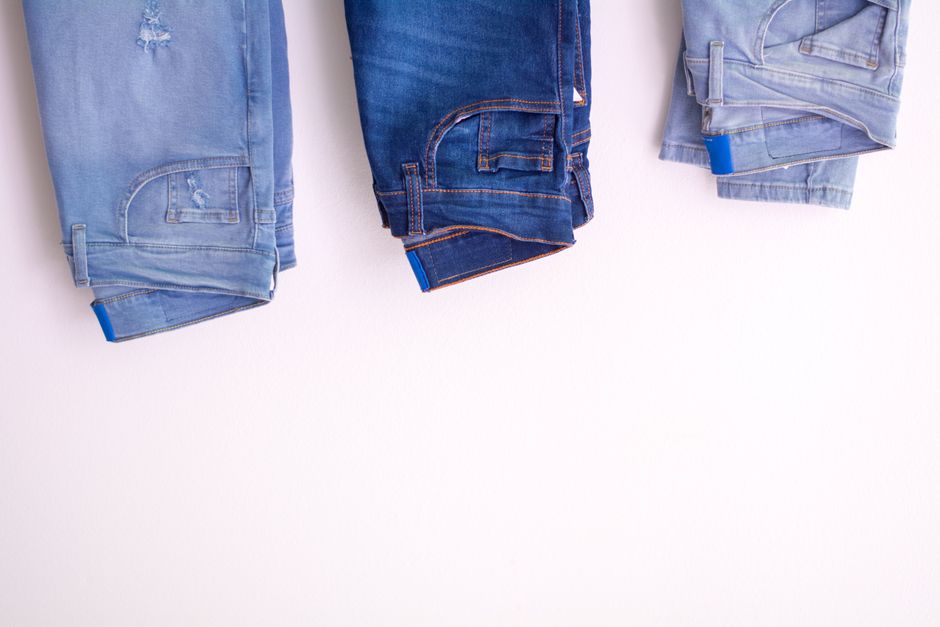
For most people buying one dependable pair, stretch denim is the better choice because it handles sitting, walking, and daily weight shifts with less pressure at the waist and thighs; Levi’s 311 Shaping Skinny Jeans are a useful budget example at a regular price around $74.95, with a mid rise, high stretch, and sizes that commonly extend through 26 in selected washes. Rigid denim earns its place when you want a sharper vintage shape, stronger fabric, and less risk of the knees bagging out, but it requires a closer first fit and a longer break-in period. The mistake is buying rigid jeans tight enough to cause pain or buying very stretchy jeans loose enough to lose their shape by lunchtime. My verdict is simple: choose 1% to 3% elastane for everyday comfort, choose mostly cotton with little or no stretch for a structured look, and skip any fabric that leaves deep marks or cannot pass the seated test.
The Final Plus-Size Jeans Fit Checklist
Use this order when you try on a pair, online or in a fitting room:
- Start with the hip and seat measurement, then confirm the waist.
- Check that the front rise stays flat when you sit.
- Look for smooth pockets without flaring or pulling.
- Walk, bend, and sit for at least five minutes.
- Judge stretch after movement, not only when standing.
- Compare the inseam with your shoes and preferred hem break.
- Reject any pair that needs a belt to stay up and shapewear to feel wearable.
For a curvy waist-to-hip ratio, I would buy Good American Good Legs first. For the broadest sizing and a tidy slim-straight shape, Universal Standard Seine is the safer choice. For smoothing with a classic straight leg, NYDJ Marilyn Straight earns the pick, while Levi’s 311 is the value option when high stretch matters more than premium fabric. This is not financial advice; it is a clothing fit guide, and sale prices can change. Denim brands are finally moving toward more detailed measurements and better size coverage, so the next useful improvement will be less about adding labels and more about publishing reliable garment dimensions for every wash and cut.