Why a Power Outfit Works Before You Speak
The strongest power outfit does one job first: it makes your role easy to read. Clean lines, controlled color, and deliberate proportions tell people that you are prepared without asking them to study your clothes. The goal is not to look severe. The goal is to remove visual distractions so your words and decisions carry more weight.
Dress for the decision in front of you
A job interview, client presentation, promotion meeting, and creative pitch each need a different level of formality. A sharply tailored suit suits a formal interview or boardroom presentation. A blazer with straight-leg trousers works better for a modern office. A knit dress with polished shoes can project authority when a full suit would look out of place. The clear winner for most professional settings is a structured jacket over a simple base layer because it gives you control without locking you into one dress code.
Use visual clarity instead of decoration
One strong line is more convincing than several loud details. A pointed shoe lengthens the leg. A jacket that ends near the hip defines the waist. A column of similar color keeps the outfit easy to read. Skip oversized logos, noisy prints, and too many pieces competing for attention. Accessories should support the outfit, not become the meeting.
A power outfit also needs movement. If the jacket pulls at the buttons, the trousers crease across the hips, or the shoes make you walk carefully, the clothes are working against you. Authority starts with comfort that looks intentional.
How to Build the Right Professional Combination
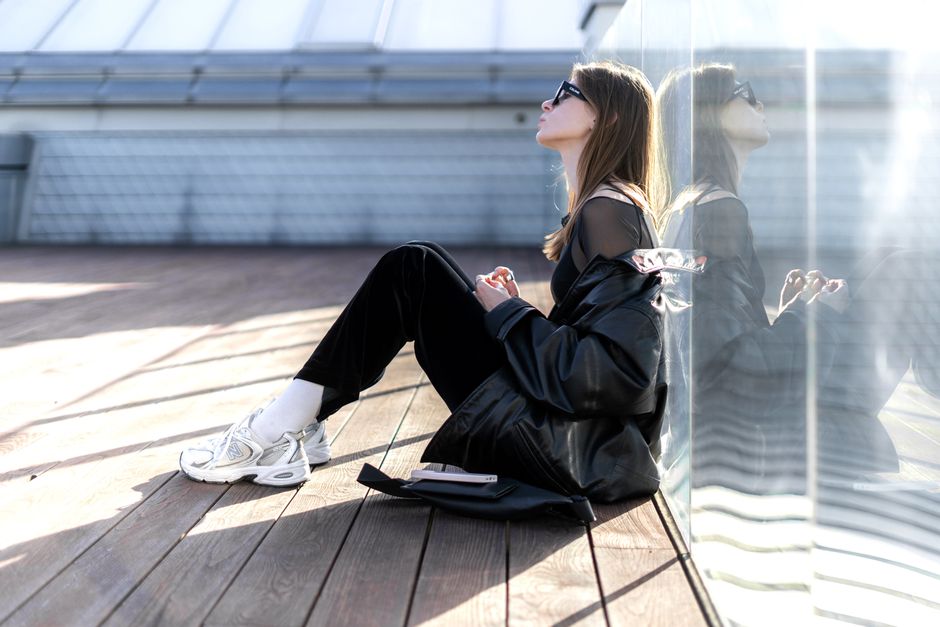
Start with the outline, then add color and texture. This order keeps the outfit sharp even when the dress code is unclear.
- Choose one anchor piece. Begin with a blazer, tailored trouser, structured dress, or polished skirt. Do not build the outfit around small accessories.
- Set the proportion. Pair a relaxed jacket with a slim or straight bottom, or balance a fitted jacket with a wider trouser. Matching volume on top and bottom can look heavy unless the fabric is very light.
- Limit the color story. Use two main colors and one accent. Navy with ivory and burgundy looks confident. Charcoal with pale blue and black feels more formal. Camel with cream and chocolate works well for a softer office.
- Repeat one visual line. A long pendant can repeat a V-neck. A belt can echo the color of the shoe. A jacket lapel can be balanced by a pointed collar. Small repetitions make separate pieces look planned.
- Check the outfit from a distance. Take a full-length photo from several feet away. If the first thing you see is a bright shoe, large print, or wrinkled sleeve, fix that distraction before adding anything else.
The three-piece test
Most successful combinations need only three visible clothing decisions: an anchor, a base, and a shoe. For example, a single-breasted blazer, a fine-gauge top, and a straight trouser create a complete outfit before jewelry or a handbag enters the picture. This approach also makes dressing faster on busy mornings.
The color contrast test
High contrast creates formality, while low contrast creates ease. Black trousers with an ivory shirt and navy jacket read more formal than tonal grey separates. For a relaxed office, try chocolate trousers, a camel jacket, and a cream shell. The verdict is simple: use contrast when you need authority and tonal dressing when you need approachability.
Which Power Outfit Formula Fits the Meeting?
There is no single uniform for professional style. The right formula depends on the level of formality, how much movement the day requires, and how much attention you want the clothes to attract. The table below gives a practical starting point.
| Setting | Outfit formula | Best color direction | Shoe choice | Main risk |
|---|---|---|---|---|
| Formal interview | Single-breasted blazer, matching trouser, shell | Navy, charcoal, or deep brown | Leather pump or sleek loafer | Shiny fabric or poor sleeve fit |
| Client presentation | Blazer, straight trouser, fine knit top | Navy with ivory or grey with pale blue | Almond-toe pump or low block heel | Too many statement accessories |
| Creative office | Long jacket, wide-leg trouser, crisp shirt | Olive, rust, cream, or ink | Pointed flat or minimal ankle boot | Loose proportions without structure |
| Promotion meeting | Column dress, belt, tailored jacket | Black, burgundy, or dark teal | Closed-toe heel or polished loafer | Dress hem or neckline that needs constant adjustment |
Reliable pieces at different budgets
The Theory Good Wool Gabe N blazer sits near $495 and offers a classic two-button shape with enough structure for formal meetings. For a softer option, the M.M.LaFleur Jardigan is usually around $285 and works as a polished knit jacket when a traditional blazer feels too rigid. The Aritzia Agency Blazer, often priced near $248, gives a more modern oversized line, but it needs a slimmer bottom to keep the outfit from looking broad.
The strongest value combination
For a lower-cost starting point, pair one excellent-fitting jacket with simple black trousers and a washable shell. Quince Ultra-Stretch Ponte Pants, often listed around $40, can fill the trouser role when the fit works for your body, but they look more polished with a structured jacket than with another stretchy piece. Prices change by color, size, and season, so check the current listing before buying. My clear pick for a first investment is the Theory blazer if you attend formal meetings often; choose the M.M.LaFleur Jardigan when comfort and travel matter more.
Fit Is the Real Power Signal
Strong styling cannot rescue a poor fit. A modest outfit that sits correctly on the shoulders, waist, and hem will look more expensive than a designer suit that pulls, gaps, or collapses at the wrong points. Fit also changes how freely you move, which matters during presentations, commutes, and long workdays.
Measure the points that change the silhouette
Check the shoulder seam first. It should finish close to the end of your shoulder, not halfway down the upper arm. Button the jacket and raise both arms. If the fabric strains across the back or the front pulls into an X shape, size up or try a different cut. The sleeve should end near the wrist bone, leaving about half an inch of shirt cuff visible when you wear a woven shirt.
Trouser fit deserves the same attention. The waistband should sit flat without digging in. A straight leg should skim the thigh and fall cleanly from the knee. A wide leg needs enough fabric to hold its shape but should not pool around the shoe. For most office outfits, a trouser hem that barely touches the top of the shoe looks cleaner than a cropped hem that exposes a large section of ankle.
Know what tailoring can and cannot fix
A tailor can shorten sleeves, adjust a trouser hem, refine the waist, and change the placement of a jacket button in some cases. Tailoring cannot correct shoulders that are several sizes too wide, a jacket with too little room across the chest, or trousers cut for a completely different rise. Never buy a garment because you assume every problem can be altered later.
The best purchase is the piece that fits the largest areas correctly before alterations. This is especially important with jackets because shoulder and chest changes are costly and can affect the balance of the whole garment. My strongest fit rule is blunt: buy the jacket that fits your shoulders, then tailor the waist and sleeve length.
Common Power Outfit Mistakes and Better Alternatives
My opinion: restraint beats visual toughness. Many people try to look authoritative by adding stiff fabrics, very high heels, dark colors, and oversized shoulders at the same time. The result can feel like a costume, especially in offices that value collaboration. Use one strong authority signal and keep the rest comfortable.
- Buying the wrong jacket length: A very short jacket can cut the body in half, while an extra-long jacket can overwhelm a petite frame. Match the hem to your proportions, not to a trend photo.
- Choosing fabric that photographs badly: Thin polyester can shine under office lighting and show every crease. Wool blends, ponte, crepe, and substantial cotton usually hold a cleaner line.
- Wearing shoes that change your walk: A 3-inch heel is not a power move if you cannot cross the room comfortably. A low block heel, pointed flat, or refined loafer can look just as deliberate.
- Making every item tight: Authority does not require compression. Leave room at the upper arm, rib cage, and seat so the outfit moves with you.
- Buying a suit for a casual office: If colleagues wear dark denim and knitwear, a full matching suit may create distance. Buy a single blazer and use it with trousers, dark jeans, or a midi skirt instead.
- Ignoring care instructions: A dry-clean-only jacket may not suit a daily commuter. Choose a washable knit jacket such as the M.M.LaFleur Jardigan when maintenance time is limited.
When not to buy the most structured option
Skip a rigid wool suit when your day includes frequent travel, standing, or temperature changes. A knit blazer and wrinkle-resistant trouser will serve you better. Skip a dramatic oversized blazer when you already wear wide-leg trousers and want a compact silhouette. Also skip pale trousers for a day involving public transit, outdoor events, or meals without a secure seat; dark tailoring is the more practical choice.
Power Outfit Questions, Answered Clearly

Does a power outfit require a matching suit?
No. A matching suit is the clearest choice for formal settings, but a coordinated jacket and trouser can look just as authoritative. The important elements are clean fit, controlled color, and a shoe that looks intentional. For many offices, a navy blazer over grey trousers feels more current and more flexible than a full navy suit.
What should I wear when the dress code is vague?
Choose a dark blazer, a simple top, a straight or gently wide trouser, and a closed-toe shoe. This combination can move up or down in formality by changing the shirt and accessories. My safest recommendation is navy with ivory because it looks professional without appearing severe.
What is the smartest first purchase?
Buy the jacket you can wear at least twice a week. For formal meetings, the Theory Good Wool Gabe N near $495 is the strongest investment among the named options because its two-button shape works with dresses and trousers. For comfort-led dressing, choose the M.M.LaFleur Jardigan around $285. For a trend-forward silhouette, choose the Aritzia Agency Blazer near $248, then keep the rest of the outfit narrow and simple.
How can I make an outfit look powerful without looking older?
Use modern proportions rather than traditional severity. Try a softly oversized jacket with a fitted knit, a wide trouser with a short structured jacket, or a rich color such as burgundy instead of plain black. Keep one classic element, such as a pointed shoe or crisp shirt, so the outfit still reads professional.
The most effective power outfit is the one with a clear silhouette, comfortable movement, and one deliberate authority signal.