
Forget the hype. You don’t need to drop four figures on a sweater to get something decent, or even great. Most people think a quality sweater under $500 is a compromise, a ‘good enough’ option. That’s just wrong. The market is full of solid knits at this price point if you know what you’re looking for. The trick isn’t finding a deal; it’s understanding where the real value lies and what to ruthlessly ignore.
The Sub-$500 Sweater Myth
Let’s get one thing straight: the idea that anything under $500 is ‘cheap’ or ‘fast fashion’ when it comes to sweaters is a myth. A well-constructed sweater from quality natural fibers doesn’t inherently cost a fortune to produce. What you often pay for above this mark is brand prestige, aggressive marketing, or unnecessary design flourishes. Your focus should be on raw materials and construction, not the label’s perceived ‘luxury.’
What “Luxury” Actually Means
When brands throw around terms like “luxury,” they’re usually talking about cashmere or fine merino. Fine, those can be luxurious. But a cheap cashmere sweater can pill aggressively after two wears, making it less luxurious than a sturdy lambswool. True luxury isn’t about the fiber’s name; it’s about the fiber’s grade and how it’s treated. A high-grade, long-staple merino wool will feel incredible and last ages. A poor-grade cashmere with short fibers will shed and pill, regardless of its ‘luxury’ tag. Under $500, you can absolutely find good quality in these fibers, but you have to be discerning. Don’t let marketing jargon blind you to actual quality.
Don’t Fall for Brand Hype
Many brands inflate prices simply because they can. They spend a fortune on marketing, celebrity endorsements, and fancy storefronts, and you, the consumer, end up footing that bill. Your $500 sweater from a high-street ‘designer’ might be identical in material and construction to a $200 sweater from a direct-to-consumer brand. Focus on the garment itself. Does it feel substantial? Is the knit even? Are the seams clean? If you’re paying a premium, make sure that premium is for tangible quality improvements, not just a logo.
The True Cost of a Quality Knit
A quality sweater under $500 isn’t a unicorn. It’s the result of efficient production, smart sourcing, and a focus on essentials. You’re paying for decent yarn, proper knitting techniques, and a fair labor cost. Brands like Everlane, Uniqlo, and J.Crew often provide excellent value in this range because they streamline their supply chains or have massive economies of scale. They might not be using the absolute finest, rarest cashmere, but their merino or lambswool is often far superior to what you’d find from lesser-known, similarly priced brands trying to pass off synthetic blends as premium. Understand that the true cost is in the fiber and the making, not the story.
Material Matters: Your First Filter
This is where most people get it wrong. Fiber content dictates everything: how it feels, how it wears, how it lasts, and ultimately, its price point. Ignore the ‘fashion’ aspect for a moment and zero in on the tag. This isn’t optional; it’s critical.
Cashmere Isn’t Always King
Everyone wants cashmere. It’s soft, it’s light, it’s warm. But not all cashmere is created equal. Cheap cashmere, often found in sweaters under $150, uses shorter, coarser fibers. This leads to aggressive pilling (those annoying little balls) and a shorter lifespan. It feels soft initially, but it degrades fast. For under $500, you can find decent two-ply cashmere, especially from direct-to-consumer brands that cut out the middleman. Look for brands that specify ‘long-staple’ cashmere. If it just says ‘cashmere’ and the price is suspiciously low, be wary. You’re better off with high-quality merino than low-grade cashmere.
The Workhorse Wools: Merino and Lambswool
These are your champions in the sub-$500 category. Merino wool is incredibly soft, breathable, and excellent at regulating temperature. It’s naturally odor-resistant and feels great against the skin, often rivaling lower-grade cashmere for comfort. Brands like Uniqlo consistently offer solid merino sweaters. Lambswool, on the other hand, is known for its durability and warmth. It can be a little coarser than merino initially, but it softens beautifully with wear and proper care. It’s a robust fiber, great for everyday sweaters that need to take a beating. Don’t overlook it. Both merino and lambswool are excellent value for money and will perform far better than a dubious cashmere blend.
Synthetics: Know Your Place
Acrylic, nylon, polyester. These are cheap. They don’t breathe well, they pill, and they often feel scratchy. There are exceptions: some high-tech synthetics are designed for performance wear, but for a classic sweater, they rarely cut it. A small percentage (say, 5-10%) of nylon or spandex can add structure or stretch, which is fine. But a sweater that is predominantly synthetic? Pass. It won’t keep you warm like wool, it won’t drape well, and it will often look cheap quickly. Save your money or invest in a natural fiber blend that still performs. Cotton can work for lighter, warmer weather sweaters, but it lacks the warmth and resilience of wools for colder months. Always check the blend percentage.
Weave & Gauge: The Unsung Heroes of Sweater Quality
Beyond the fiber, how a sweater is knit fundamentally impacts its look, feel, and durability. This isn’t just aesthetic; it’s about structural integrity. Too many people ignore this, focusing only on the material. Big mistake.
- Understanding Gauge: Fine vs. Chunky
Gauge refers to the number of stitches per inch. A high gauge (e.g., 12-gauge or 14-gauge) means a finer, denser knit. These sweaters feel smooth, drape elegantly, and are often lighter. They’re great for layering under blazers. Lower gauge knits (e.g., 5-gauge or 7-gauge) are chunkier, warmer, and have a more casual, rugged feel. They use more yarn, which can increase cost. Both can be high quality, but understand their purpose. A fine-gauge knit from poor yarn will still pill. A chunky knit from good wool will last forever. Match the gauge to your intended use.
- Common Weaves and Their Best Use
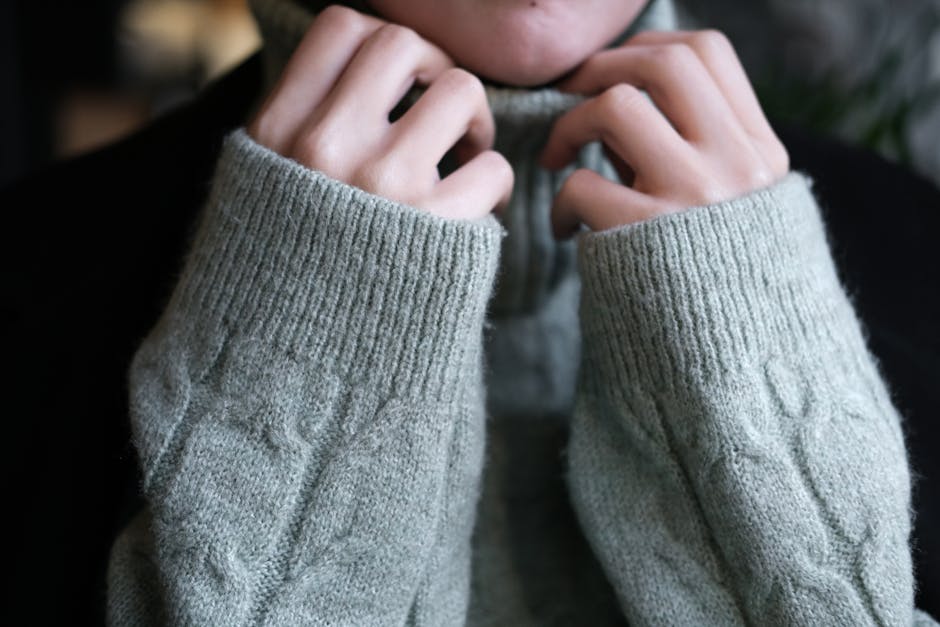
Different knits offer different qualities. A classic jersey knit is smooth and versatile, excellent for everyday wear. Rib knits (like 1×1 or 2×2 rib) provide stretch and recovery, making them perfect for cuffs, collars, and body-hugging styles. They retain their shape better. Cable knits add texture and warmth, often seen in chunkier, more traditional sweaters, using a lot of yarn and requiring skilled craftsmanship. For under $500, look for clean, consistent cable patterns without loose threads. Shaker knits are known for their rugged texture and durability. Pay attention to the uniformity of the knit; uneven stitches indicate poor quality control.
- Construction: Seams and Ribbing
Even with great yarn and weave, poor construction ruins a sweater. The seams should be flat, strong, and even. Look for fully fashioned seams, where panels are knit to shape and then linked together, rather than cut and sewn. Cut-and-sew construction is cheaper, uses more fabric waste, and can lead to bulkier, less durable seams. While fully fashioned is rarer in the sub-$500 range, some brands achieve it. Examine the ribbing on cuffs and hems; it should be firm, elastic, and spring back when stretched, not loose or flimsy. Weak ribbing means a sweater won’t hold its shape.
Spotting a Cheap Knit: Red Flags to Avoid

You need to be ruthless when inspecting a sweater. Don’t be fooled by a low price or a soft initial feel. Some issues are immediate red flags; others reveal themselves quickly after purchase. Be smart. Be skeptical.
How Do You Check Seams and Finishings?
Turn the sweater inside out. Are the seams neat and flat, or are they bulky and sloppy? Good seams are an indicator of care in production. Pull gently at the seams; they shouldn’t show gaps or signs of coming undone. Check where the sleeves attach to the body—this is a common stress point. Look at the collar and button plackets (if any). Are they well-formed and securely attached? Loose threads, uneven stitching, or puckering are all signs of poor craftsmanship. A truly quality garment, even at a reasonable price, will show attention to detail here. Don’t settle for less.
What About Pilling and Shedding Before Purchase?
This is tricky. You can’t always predict pilling, but you can look for early warning signs. Gently rub a small, inconspicuous area of the sweater (like under an arm) with your thumb. If fibers immediately start to loosen or form tiny balls, it’s a bad sign. Short-staple fibers, which are prone to pilling, will reveal themselves this way. Shedding is easier to spot; simply run your hand over the surface. If a cloud of fibers comes off, that sweater will make a mess of your shirts and probably won’t last. While some natural shedding is normal for new wool, excessive shedding indicates poor quality control or very short fibers.
Is a High Price Always a Guarantee of Quality?
Absolutely not. This is a common misconception. As mentioned, marketing and brand name drive up prices significantly. A $450 sweater from a fashion brand might be made from the exact same merino as a $150 sweater from a reputable direct-to-consumer brand. You need to look beyond the price tag and focus on the tangible attributes: fiber content, gauge, weave consistency, and construction. Do your homework. Read reviews that talk about longevity and actual wear, not just initial impressions. Don’t assume a higher price automatically means a better sweater; it often just means better marketing.
Brands Delivering Genuine Value Under $500
Finding great sweaters under $500 isn’t about luck. It’s about knowing which brands consistently deliver on materials and construction without the inflated price tag. Some brands are masters of basics; others punch above their weight in premium fibers. This isn’t an exhaustive list, but it covers reliable players.
| Brand | Typical Offerings (Under $500) | Pros | Cons | |
|---|---|---|---|---|
| Uniqlo | Extra Fine Merino, Lambswool, Cashmere (entry-level) | Excellent value for basics, consistent quality, wide color range. Merino is a standout. | Cashmere can be thin, fit can be generic. | |
| Everlane | Cashmere, Merino, ReCashmere blends | Focus on ethical sourcing, transparent pricing. Good quality cashmere for the price. | Limited styles, fit can vary. | |
| J.Crew | Cashmere, Merino, Lambswool blends | Classic American styles, often good sales, decent fiber quality. | Quality can fluctuate season-to-season, some blends are less desirable. | |
| COS | Merino, Cashmere blends, Alpaca blends | Minimalist aesthetic, often interesting textures and oversized fits. Good material choice. | Can be pricey outside of sales, specific aesthetic not for everyone. | |
| Brooks Brothers | Merino, Lambswool (often Pima cotton) | Traditional, professional styles. Reliable quality for classic pieces. | More conservative designs, less fashion-forward. | |
| Naadam | Cashmere (often 100%) | Direct-to-consumer model for affordable cashmere. | Can be thin at lower price points, styles lean casual. |
Solid Bets for Everyday Wear
For your everyday rotation, you can’t go wrong with Uniqlo’s Extra Fine Merino or their lambswool. They are consistently well-made, offer a huge range of colors, and hold up well. They’re not going to be the softest or most luxurious, but for the price, they’re unbeatable workhorses. J.Crew also delivers solid merino and lambswool, especially when they have sales. Their styles are classic and versatile. These brands provide reliable, no-nonsense options that won’t break the bank and will see you through many seasons.
Stepping Up to Premium Fibers
If you’re aiming for cashmere or higher-grade merino, Everlane and Naadam are strong contenders. Everlane’s cashmere is often praised for its transparency and reasonable price point, offering a soft hand without the typical luxury markup. Naadam built its reputation on making cashmere accessible. Just be realistic; a $100 100% cashmere sweater will feel different than a $500 one from a high-end brand, but it’s still genuine cashmere. COS often has interesting blends, including merino and alpaca, with a modern design sensibility that feels more premium than its price suggests.
Brands to Scrutinize Closely
Some brands, particularly those heavy on marketing or with rapidly changing fashion lines, require more scrutiny. They might offer a wide range of sweaters, but the quality can vary wildly. Always check the fiber content and examine the construction. Don’t assume that because a brand has a high-end reputation for other garments, their sweaters automatically follow suit. It’s easy for brands to cut corners on knits. Be particularly wary of fashion-forward brands offering extremely low-priced cashmere; it’s likely very short-staple and will disappoint quickly.
The Real Deal on Sweater Longevity
You can buy the best sweater in the world, but if you treat it like a dish rag, it won’t last. Longevity isn’t just about initial quality; it’s about how you maintain it. This is non-negotiable. Get this wrong, and you’ve wasted your money, regardless of how much you spent.
Washing Wisely: Hand Wash or Dry Clean?
Most wool sweaters, especially merino and lambswool, prefer hand washing over machine washing. Cold water, a gentle wool-specific detergent, and minimal agitation are key. Lay them flat to dry. Never hang a wet wool sweater; it will stretch and lose its shape. Cashmere usually benefits from hand washing too, though some prefer dry cleaning. If the tag says ‘dry clean only,’ heed it, particularly for complex weaves or delicate blends. Investing in proper wool wash and taking the time to hand wash will extend your sweater’s life by years. It’s a small effort for a big return. Don’t be lazy about it.
Smart Storage: Preventing Stretch and Damage
Hanging sweaters, especially heavier knits, is a recipe for disaster. Gravity will stretch out the shoulders and warp the shape. Fold your sweaters. For delicate knits like cashmere or fine merino, fold them neatly and store them in drawers or on shelves. For chunkier knits, stacking them is fine. Use cedar blocks or lavender sachets to deter moths, which love natural fibers. Ensure they are clean before storing for extended periods; moths are attracted to dirt and body oils. Proper storage prevents irreversible damage and keeps your sweaters looking fresh season after season. It’s not rocket science; it’s just common sense.