The problem with white sneakers is not finding a pair that looks good on day one. It is finding one that still looks intentional after rain, subway floors, long walks, and six months of real outfits. I have learned to judge the label, leather, sole, fit, and cleaning routine together, because a sustainability claim means little if the shoe becomes uncomfortable or unwearable.
Why White Sneakers Wear Out Faster Than You Expect
White leather shows every shortcut
White sneakers face a harder job than dark footwear. Dust settles into the stitching, denim transfers blue around the collar, and rubber midsoles turn gray before the upper looks truly dirty. Smooth leather can be wiped clean, but deep creases still become visible. Coated leather hides marks for longer, yet it may crack when the coating dries out. Canvas breathes better, but it absorbs water and stains quickly.
The first verdict is simple: buy a white sneaker only if you accept a small maintenance routine. A pair that needs five minutes of care every week will stay in rotation. A pair that requires a full restoration after every wet walk will sit in the closet.
The sole matters as much as the upper
A thick rubber cupsole gives a white sneaker its clean, grounded shape, but it also catches dirt along the edge. Look for a sole with a firm sidewall and a tread pattern deep enough for wet pavement. A flat fashion sole can feel fine in a store and become tiring after several hours. The best everyday white sneakers usually have moderate cushioning, a stable heel, and enough flex at the ball of the foot.
Longevity is part of sustainability
The greenest choice is often the shoe you will wear twice a week for three years. A low-impact material does not cancel out a poor fit, premature peeling, or a design that only works with one outfit. Check the stitching around the toe box, the bond between upper and sole, and the heel counter before paying. If those areas already look loose, do not treat the purchase as a responsible bargain.
For that reason, my category verdict favors durability first, repairability second, and material claims third. A well-fitting white sneaker earns its environmental cost through repeated wear.
Veja or Autry: Which Brand Has the Stronger Sustainability Case?

If sustainability is the deciding factor, Veja has the stronger public story. The brand has built its identity around organic cotton, recycled polyester, Amazonian rubber, and clearer sourcing language. That does not make every Veja model low-impact, and leather still carries a major material footprint. It does mean the brand gives shoppers more information to examine.
Material and price comparison
| Model | Typical US price | Material notes | Best use |
|---|---|---|---|
| Veja Campo Leather | About $175 | Leather upper, recycled polyester details on selected versions | Clean daily outfits |
| Veja V-10 Leather | About $195 | Leather upper, rubber outsole, recycled elements vary by release | More visible logo styling |
| Autry Medalist Low | About $195 | Leather upper, rubber cupsole, vintage finish | Relaxed denim and casual tailoring |
| Reebok Club C 85 Vintage | About $120 | Leather upper on standard versions, limited sustainability detail | Lower-cost classic shape |
| Cariuma OCA Low | About $98 | Canvas or leather options, recycled and bio-based details vary | Lighter casual wear |
Prices change by color, sale, and region, so treat these as working retail figures rather than permanent guarantees. Autry is more transparent as a style proposition than as an environmental one. Its appeal comes from the worn-in tennis shape, generous leather panels, and retro branding. That is a valid reason to buy it, but it is not the same as a detailed material program.
Do not confuse recycled content with a low-impact shoe
A recycled lining may reduce the use of virgin polyester, while leather still dominates the upper and tanning process. Organic cotton can lower pesticide use, but the final shoe also includes glue, rubber, dyes, packaging, and shipping. Ask what part of the shoe a claim covers. If the answer only describes one insert or one lace, it should not decide the entire purchase.
My sustainability verdict is Veja, especially the Campo in a version with documented recycled or organic components. Choose Autry for its shape and styling, not because the branding alone proves a cleaner footprint.
Which Pair Feels Better on a Full Day of Walking?
Is Autry more comfortable straight out of the box?
Usually, yes. The Autry Medalist Low has a padded collar and a soft-looking leather build that feels forgiving during the first few wears. Its vintage finish also hides small creases, which helps if you dislike a perfect, showroom-white shoe. The tradeoff is weight. The layered upper and substantial sole can feel heavy beside a slim tennis sneaker, especially on travel days.
Does Veja need a break-in period?
Many Veja leather models feel firmer at first. The Campo has a structured upper and a fairly stable base, which I prefer for short commutes, office outfits, and city walking with a supportive insole. Give it three to five wears with normal socks before judging the fit. If the toe box presses against your big toe on day one, do not expect the leather to solve the problem. Creasing softens; inadequate width does not.
What size should you choose?
Measure both feet in the afternoon, when they are slightly larger, and compare the longer foot with the brand’s size chart. Leave roughly 10 to 12 millimeters in front of the longest toe. Your heel should stay put when you walk, but the collar should not rub the Achilles tendon. People with wide feet often prefer the Autry shape, while narrow or medium feet tend to get a neater hold from Veja. That is a practical fit guide, not a rule for every foot.
My comfort verdict: pick Autry for a softer first week and a roomier retro feel; pick Veja for a firmer, cleaner shoe that feels more controlled once broken in. Neither is the right choice for serious running or all-day standing without testing the fit first.
How to Choose a White Sneaker That Works With Your Wardrobe
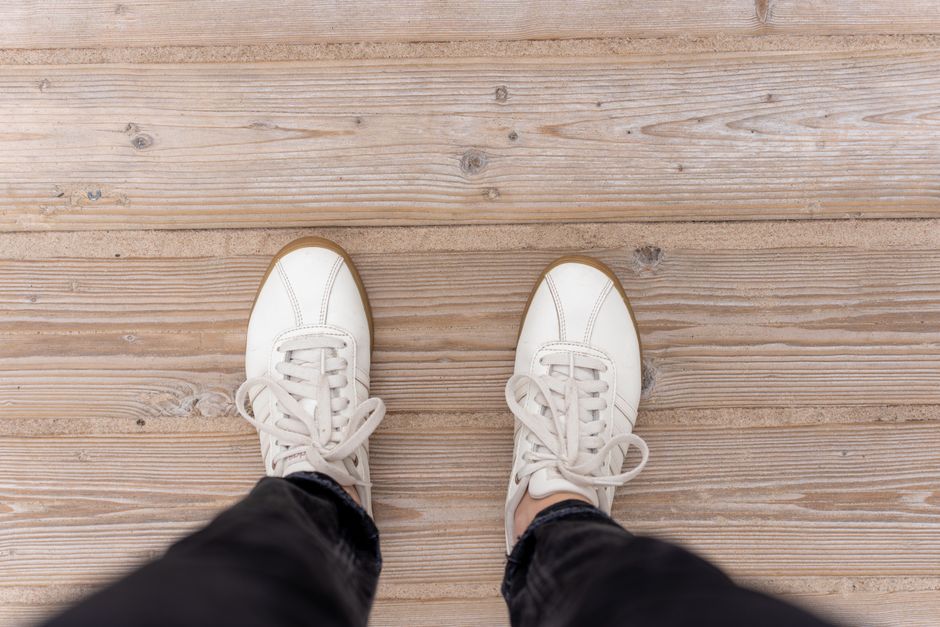
My strongest style advice is to choose the shape before the logo. The wrong toe profile can make a good outfit look dated, while the right one can carry jeans, trousers, skirts, and relaxed tailoring for years.
- Match the toe to your trousers. Slim or straight trousers look better with a low, narrow toe. Wide-leg denim can handle a chunkier sole, but the sneaker should not disappear under the hem.
- Choose the right white. Bright optic white looks sharper with black, navy, and crisp shirting. A cream or lightly aged finish works better with ecru denim, brown, olive, and soft gray. Mixing stark white with heavily washed beige can look accidental.
- Check the logo scale. A large side mark becomes the focal point of the outfit. Small branding gives you more room to wear the sneaker with workwear and tailored pieces.
- Use the heel height as a proportion tool. A low sole looks polished and lengthens the foot visually. A thicker sole adds casual weight and may balance oversized jackets or wide trousers.
- Test three outfits before buying. Wear the sneaker with your most-used jeans, your everyday trousers, and one skirt or dress. If it only works with denim, it is a weekend shoe, not a true wardrobe base.
The clear verdict is to buy the quietest shape that fills a real gap. For a polished capsule wardrobe, a low-profile white or off-white sneaker wins. For a relaxed vintage wardrobe, a layered court shape earns its extra visual weight. Do not buy a highly branded pair simply because it photographs well online.
White Sneaker Mistakes That Ruin the Look
Wearing leather sneakers in heavy rain
Water does not automatically destroy leather, but soaked linings, damp insoles, and repeated drying beside a radiator can warp the shoe. Use a water-resistant spray made for the exact upper, test it on a hidden area, and let the sneakers dry at room temperature. Stuff them with plain paper, not printed newspaper, which can transfer ink. If the forecast calls for hours of rain, choose another pair.
Cleaning with harsh household products
Bleach, abrasive powder, and rough kitchen sponges can strip color from leather and leave the rubber edge looking yellow. Start with a soft brush, lukewarm water, and a small amount of mild soap. Wipe the upper instead of soaking it. Use a separate melamine sponge only on the rubber midsole, with a light touch. The goal is to remove surface dirt, not sand down the shoe.
Ignoring the insole and heel
A clean upper cannot rescue a sneaker with a compressed insole or a collapsing heel counter. Rotate white sneakers with another pair so the foam can recover between wears. Replace removable insoles when they flatten, and use cedar or plain paper to control moisture. If the heel slips after tightening the laces, the shoe is probably the wrong shape. Do not solve a structural fit problem with thicker socks.
Do not buy white leather sneakers if you will resent cleaning them, need a waterproof shoe, or spend most days on rough outdoor surfaces. A dark canvas pair, a washable textile sneaker, or a trail-inspired walking shoe will serve you better. The sustainable choice is the one you can maintain without forcing it into a job it was never built to do.
My 2026 Verdict: Veja for Values, Autry for Style

For the best balance of sustainability information, everyday polish, and long-term versatility, I would buy the Veja Campo. It costs about $175, has a cleaner profile than the Autry Medalist Low, and works with more of my wardrobe. I would choose the Autry Medalist Low at about $195 when the main goal is a relaxed vintage silhouette, a padded feel, and a sneaker that looks better with natural creasing.
Buy Veja if these are your priorities
Choose Veja when you want a white sneaker for office-casual outfits, narrow to medium feet, and a brand that gives more detail about selected materials and sourcing. Expect some firmness during the break-in period. Keep the color choice simple, clean the rubber weekly, and avoid treating the shoe as a rain boot.
Buy Autry if these are your priorities
Choose Autry when you want a chunkier court shape, a softer first impression, and a vintage finish that does not demand spotless perfection. It is the better styling pick for relaxed denim, wide trousers, and casual jackets. Do not pay the premium for environmental reasons alone; the stronger case is the design and comfort.
Skip both if you need a light travel shoe, a wide orthopedic fit, or a pair for constant wet-weather walking. The Reebok Club C 85 Vintage costs about $120 and offers a simpler classic alternative, while the Cariuma OCA Low starts near $98 and feels lighter in canvas versions. After years of wearing white sneakers, my answer is clear: Veja is the smarter all-round purchase, Autry is the more distinctive style purchase, and neither deserves the hype unless the fit makes you want to wear it repeatedly.